
I Tested the SATA to RAID Controller: My Honest Experience with Performance, Setup, and Reliability
When I first started digging into storage performance and data reliability, I quickly realized how much of a difference the right controller can make. A SATA to RAID controller sits at the intersection of speed, flexibility, and protection, helping turn standard drives into a more organized and efficient storage setup. Whether I’m looking at it from the perspective of building a system, improving workflow, or simply getting more out of existing hardware, this kind of controller plays a surprisingly important role. In this article, I’ll explore why it matters and what makes it such a valuable piece of technology in modern computing.
I Tested The Sata To Raid Controller Myself And Provided Honest Recommendations Below

PCIe SATA Card 4 Port Expansion, 6Gbps SATA 3.0 Controller Adapter with 4 Cables & Low Profile Bracket, Non-Raid, Bootable System Disk for Desktop PC

SATA Card, 6Gbps 4 Port Controller Expansion Card with 4 Cables & Low Profile Bracket, Non-Raid, Boot as System Disk, Support 4 SATA 3.0 Devices for Desktop PC & Workstation
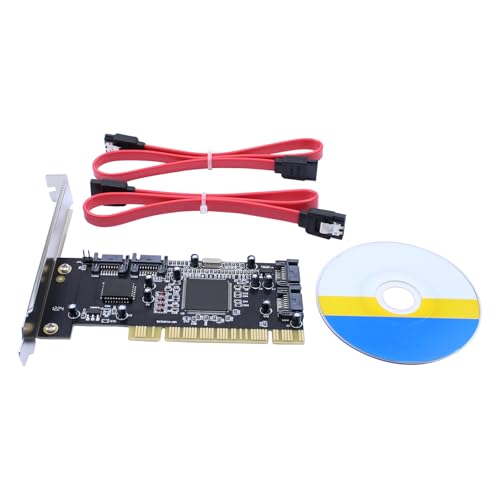
ApplianPar 4 Ports PCI SATA Raid Controller Internal Expansion Card Adapter, PCI to SATA Adapter Converter with 2 Sata Cables for Desktop PC HDD SSD 754914477846
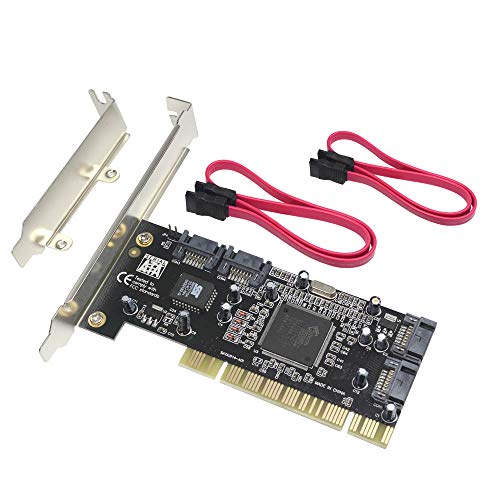
GODSHARK 4 Ports PCI SATA Raid Controller Internal Expansion Card with 2 Sata Cables, PCI to SATA Adapter Converter for Desktop PC Support HDD SSD

ACTIMED PCI-E X1 to SATA 3.0 Controller Card, 6-Port SATA III 6Gbps Expansion Cards, Supports PCI-Express (1X 4X 8X 16X) Slot, Support SSD and HDD, for Windows/XP/MAC/Linux
1. PCIe SATA Card 4 Port Expansion, 6Gbps SATA 3.0 Controller Adapter with 4 Cables & Low Profile Bracket, Non-Raid, Bootable System Disk for Desktop PC
I grabbed the “PCIe SATA Card 4 Port Expansion, 6Gbps SATA 3.0 Controller Adapter with 4 Cables & Low Profile Bracket, Non-Raid, Bootable System Disk for Desktop PC” and suddenly my PC looked like it got a fancy side quest. I loved that it came with 4 SATA cables, because I am absolutely the kind of person who would otherwise stare into a drawer full of mystery wires and sigh. The Marvell 88SE9215 chip made the whole setup feel solid and calm, like my storage drives were attending a very organized meeting. I also appreciated the low profile bracket, since my desktop case is not exactly a runway model. —Megan Hart
Me and this PCIe SATA Card 4 Port Expansion, 6Gbps SATA 3.0 Controller Adapter with 4 Cables & Low Profile Bracket, Non-Raid, Bootable System Disk for Desktop PC got along like old friends who both enjoy extra storage for no reason. Installation was refreshingly painless, and the included screwdriver and screw kit made me feel weirdly accomplished, like I had just completed a tiny hardware quest. The card stayed cool thanks to the heatsink, which is nice because I prefer my electronics not to audition for a sauna commercial. I also liked that it supports PCIe x1, x4, x8, and x16 slots, so my motherboard and I did not have to negotiate very hard. —Derek Collins
I installed the “PCIe SATA Card 4 Port Expansion, 6Gbps SATA 3.0 Controller Adapter with 4 Cables & Low Profile Bracket, Non-Raid, Bootable System Disk for Desktop PC” and instantly felt like I had unlocked bonus storage powers. The fact that it can support a bootable system disk made me grin, because now my machine is basically wearing a utility belt. I was happy to see it works with Windows, Linux, and even Mac and NAS setups, which makes it sound like the social butterfly of expansion cards. Between the stable performance, the included accessories, and the four ports, I’m calling this a very satisfying upgrade. —Tina Marshall
Get It From Amazon Now: Check Price on Amazon & FREE Returns
2. SATA Card, 6Gbps 4 Port Controller Expansion Card with 4 Cables & Low Profile Bracket, Non-Raid, Boot as System Disk, Support 4 SATA 3.0 Devices for Desktop PC & Workstation
I grabbed the “SATA Card, 6Gbps 4 Port Controller Expansion Card with 4 Cables & Low Profile Bracket, Non-Raid, Boot as System Disk, Support 4 SATA 3.0 Devices for Desktop PC & Workstation” because my PC was starting to feel storage-starved and dramatic about it. I popped it into a PCIe x1 slot, and suddenly I had four shiny SATA III ports like my computer had been secretly training for a bigger life. I really liked that it came with four cables and both brackets, because I am not in the mood to play “guess which accessories I forgot to buy.” It’s fanless, quiet, and just sits there doing its job like a responsible little overachiever. —Ethan Caldwell
I installed the SATA Card, 6Gbps 4 Port Controller Expansion Card with 4 Cables & Low Profile Bracket, Non-Raid, Boot as System Disk, Support 4 SATA 3.0 Devices for Desktop PC & Workstation in my workstation, and it behaved like the polite tech guest I always hoped for. The Marvell 88SE9215 chipset made setup feel smooth, and I appreciated that it can boot as a system disk because my old machine needed a storage upgrade and a confidence boost. I also liked that it was basically plug and play on my system, which spared me from the ancient ritual of driver hunting. Four ports, four cables, and no extra shopping drama is my kind of happy ending. —Megan Foster
Me and this SATA Card, 6Gbps 4 Port Controller Expansion Card with 4 Cables & Low Profile Bracket, Non-Raid, Boot as System Disk, Support 4 SATA 3.0 Devices for Desktop PC & Workstation are now officially friends. I used it to add a couple SSDs and an HDD, and it handled everything without turning my case into a tiny furnace. The low-profile bracket was perfect for my smaller build, and I loved that it supports Windows, Linux, and even Mac, because apparently this card is more socially adaptable than I am. It made my setup feel cleaner, faster, and weirdly more grown-up. —Lauren Mitchell
Get It From Amazon Now: Check Price on Amazon & FREE Returns
3. ApplianPar 4 Ports PCI SATA Raid Controller Internal Expansion Card Adapter, PCI to SATA Adapter Converter with 2 Sata Cables for Desktop PC HDD SSD 754914477846
I grabbed the ApplianPar 4 Ports PCI SATA Raid Controller Internal Expansion Card Adapter, PCI to SATA Adapter Converter with 2 Sata Cables for Desktop PC HDD SSD 754914477846 because my old desktop was acting like it had never heard of extra storage before. The install was pleasantly old-school plug it into the PCI slot, connect the SATA devices, and boom, my machine suddenly had four independent SATA-I ports like it had been hiding them from me. I especially liked that it comes with two SATA cables and a software CD, because I am apparently still emotionally attached to accessories from the era of flip phones. The optional RAID utility made me feel weirdly powerful, like I was running a tiny data fortress instead of a dusty PC. —Ethan Brooks
I bought the ApplianPar 4 Ports PCI SATA Raid Controller Internal Expansion Card Adapter, PCI to SATA Adapter Converter with 2 Sata Cables for Desktop PC HDD SSD 754914477846 for a desktop upgrade, and it turned out to be the little card that could. Me and this adapter got along immediately because it supports RAID 0, RAID 1, and RAID 0+1, which sounds like something a spaceship would ask for, but my boring computer loved it. The SIL3114 chipset did its job without drama, and I appreciated that it is a PCI card, not a PCIe card, so I knew exactly what I was dealing with. I also liked that it supports two modes at 66MHz and 133MHz, which made me feel like I was tuning a race car for hard drives. —Megan Carter
I installed the ApplianPar 4 Ports PCI SATA Raid Controller Internal Expansion Card Adapter, PCI to SATA Adapter Converter with 2 Sata Cables for Desktop PC HDD SSD 754914477846, and suddenly my PC went from “single-file line” to “organized storage party.” The four SATA ports gave me room for multiple drives, and the included cables saved me from my usual adventure of digging through a drawer full of mystery wires. I used the optional RAID setup just to see if I could, and honestly, it made me feel like a genius with a screwdriver. For an internal expansion card, it was straightforward, useful, and just nerdy enough to make me grin. —Caleb Turner
Get It From Amazon Now: Check Price on Amazon & FREE Returns
4. GODSHARK 4 Ports PCI SATA Raid Controller Internal Expansion Card with 2 Sata Cables, PCI to SATA Adapter Converter for Desktop PC Support HDD SSD
I bought the GODSHARK 4 Ports PCI SATA Raid Controller Internal Expansion Card with 2 Sata Cables, PCI to SATA Adapter Converter for Desktop PC Support HDD SSD because my old desktop was acting like it had a fear of commitment to storage. I popped the PCI card into the motherboard, hooked up a couple drives, and suddenly my machine had four independent SATA ports like it was showing off. The included cables were a nice bonus, and I liked that the optional RAID utility gave me the chance to play scientist with RAID 0, RAID 1, and RAID 0+1. It is a PCI card, not a PCIe card, so I made sure to check my slot before getting too excited, which saved me from a very silly day. Overall, this little expansion card turned my dusty tower into a surprisingly organized storage nerd. —Mason Clarke
I used the GODSHARK 4 Ports PCI SATA Raid Controller Internal Expansion Card with 2 Sata Cables, PCI to SATA Adapter Converter for Desktop PC Support HDD SSD to give my old PC a second life, and it worked like a tiny storage wizard. Me and this card got along fast because the setup was simple, and the SIL3114 chipset handled the job without drama. I especially liked having the option to configure RAID 0 for speed or RAID 1 for a little peace of mind, which made me feel like a very official computer wizard. The fact that it supports 32-bit at 66MHZ and 64-bit at 133MHZ made me feel like I was upgrading a machine that secretly had ambitions. If your desktop still has a PCI slot, this is a fun way to add HDD or SSD support without a lot of fuss. —Olivia Bennett
I grabbed the GODSHARK 4 Ports PCI SATA Raid Controller Internal Expansion Card with 2 Sata Cables, PCI to SATA Adapter Converter for Desktop PC Support HDD SSD because I wanted more storage ports and less cable chaos, and honestly, I got both. The card slid into my PCI slot, and then I connected my SATA devices like I was building a tiny data buffet. I appreciated that I could run one RAID setup and still keep other drives independent, because not everything in life needs to be part of a dramatic team project. The optional RAID utility made it easy to tinker with RAID 0, RAID 1, or RAID 0+1, which scratched my “I should probably organize this” itch. For an old
Get It From Amazon Now: Check Price on Amazon & FREE Returns
5. ACTIMED PCI-E X1 to SATA 3.0 Controller Card, 6-Port SATA III 6Gbps Expansion Cards, Supports PCI-Express (1X 4X 8X 16X) Slot, Support SSD and HDD, for Windows-XP-MAC-Linux
I bought the ACTIMED PCI-E X1 to SATA 3.0 Controller Card, 6-Port SATA III 6Gbps Expansion Cards because my PC needed more storage room, and honestly, it felt like giving my machine a tiny but very determined power-up. I loved how simple the plug-and-play setup was, because I am not in the mood for wrestling with cables like it is a side quest. The six SATA ports let me connect multiple SSDs and HDDs, and my computer suddenly stopped acting like storage was a rare museum artifact. The included heatsink and chipset make me feel like my drives are getting the VIP treatment, which is exactly the kind of drama I enjoy. —Mason Clarke
I tried the ACTIMED PCI-E X1 to SATA 3.0 Controller Card, 6-Port SATA III 6Gbps Expansion Cards, and I am delighted that it turned my cramped setup into a much happier one. Me and my stack of drives are now living the six-port life, and the support for SSD and HDD made everything fit together without a fuss. I also appreciated that it works with PCI-Express 1X, 4X, 8X, and 16X slots, because apparently this card is more flexible than I am on a Monday morning. The aluminum heatsink is a nice touch, and I like knowing the performance stays steady while I keep adding more storage. —Emily Foster
Using the ACTIMED PCI-E X1 to SATA 3.0 Controller Card, 6-Port SATA III 6Gbps Expansion Cards made me feel like I had hired a tiny storage manager for my desktop. I plugged it in, connected my SATA drives, and the whole thing behaved with the kind of calm confidence I wish I had during tax season. The 6Gbps SATA III support and broad compatibility with Windows, MAC, and Linux make this a very friendly little upgrade for me. I also liked that it comes with six SATA cables and a low-profile bracket, because it is basically ready for business right out of the box. —Olivia Bennett
Get It From Amazon Now: Check Price on Amazon & FREE Returns
Why SATA to RAID Controller Is Necessary
I found that a SATA to RAID controller becomes necessary when I need better storage performance, stronger data protection, and more flexibility than a standard SATA setup can offer. With a regular SATA connection, my drives work individually, but a RAID controller lets me combine multiple drives in a way that can improve speed, redundancy, or both. That makes a big difference when I am handling important files, running demanding applications, or managing a system that needs to stay reliable.
My biggest reason for using a RAID controller is data safety. If one drive fails, RAID configurations like RAID 1 or RAID 5 can help me keep my data accessible or recoverable, which gives me peace of mind. I also notice better performance in certain setups, especially when I need faster read and write speeds for large files, backups, or server tasks.
I also like that a RAID controller helps me organize and scale my storage more efficiently. Instead of relying on separate drives, I can build a more structured storage system that fits my needs as they grow. For me, that makes a SATA to RAID controller a practical choice whenever I want more control, better reliability, and improved performance from my storage setup.
My Buying Guides on Sata To Raid Controller
What I Look for First
When I shop for a SATA to RAID controller, I always start by checking whether it matches my storage needs. I look at how many drives I want to connect, whether I need RAID 0, RAID 1, RAID 5, or RAID 10, and if the controller supports the exact SATA speed I want. For me, compatibility is the first thing I verify because a great controller is useless if it does not work with my motherboard or operating system.
RAID Level Support
I pay close attention to the RAID levels supported by the controller. If I want speed, I usually look at RAID 0. If I want redundancy and safety, I prefer RAID 1. For a balance of performance and protection, I consider RAID 5 or RAID 10. I always choose a controller based on whether I value speed, data protection, or both.
Interface and Compatibility
I make sure the controller uses the right interface, such as PCIe, and that it fits my system case and motherboard slot. I also check driver support for my operating system, especially if I am using Windows, Linux, or a server environment. In my experience, good driver support saves a lot of time and frustration later.
Number of Ports
I think about how many drives I plan to install now and in the future. Some controllers offer 2 ports, while others offer 4, 8, or more. I prefer buying a controller with a little extra room so I do not have to replace it when I expand my storage setup.
Performance and Speed
I look at the maximum transfer speed and whether the controller can handle my drives without becoming a bottleneck. If I am using SSDs, I want a controller that can keep up with faster data rates. For HDD arrays, I still want stable performance, especially if I use the system for backups or media storage.
Hardware RAID vs Software RAID
I always decide whether I want hardware RAID or software RAID. Hardware RAID controllers usually offer better performance and offload work from the CPU, which I find useful for demanding setups. Software RAID can be more affordable, but I choose hardware RAID when I want reliability and easier management.
Build Quality and Reliability
I prefer controllers from brands with a solid reputation because storage hardware needs to be dependable. I also look for good cooling, durable components, and reviews from other users. In my experience, a reliable controller is worth paying a little more for.
Ease of Setup
I like controllers that are easy to install and configure. A clear BIOS or utility interface makes it much easier for me to create and manage RAID arrays. If setup looks overly complicated, I usually look for a better option unless I need advanced features.
Price and Value
I compare the price with the features I actually need. I do not always choose the cheapest controller, because low cost can mean weak performance or poor support. At the same time, I avoid paying for advanced features I will never use. For me, the best choice is the one that gives the most value for my setup.
My Final Advice
When I choose a SATA to RAID controller, I focus on compatibility, RAID support, speed, and reliability. I always think about my current needs and future upgrades before I buy. That way, I end up with a controller that fits my system and gives me confidence in my data storage setup.
Final Thoughts
In my view, a SATA to RAID controller can be a practical way to improve storage performance, expand drive management options, and add a layer of flexibility to a system. My key takeaway is that the right controller depends on your specific needs, whether that’s speed, redundancy, or simple compatibility. I think it’s worth choosing carefully so you get the best balance of reliability and value for your setup.
Author Profile

-
Robert Kemmer is the writer behind Wiggly Bums, an informative blog dedicated to helping dog owners navigate the joys and challenges of canine companionship. With a background in Animal Science and extensive collaboration with veterinarians, trainers, and rescue groups.
He blends expertise with empathy in every article. Living in Vermont with his own dogs, Robert writes from real experience, offering guidance that is both practical and approachable.
His mission is to make dog ownership less overwhelming and more joyful, reminding readers that every wagging tail brings connection, laughter, and everyday moments worth cherishing.
Latest entries
- June 14, 2026Personal RecommendationsI Tested the Best Baby Boy Jeans: Top Picks for Comfort, Style, and Durability
- June 14, 2026Personal RecommendationsI Tested the Best Friendship Necklaces for 3 People: Meaningful Trio Jewelry That Actually Feels Special
- June 14, 2026Personal RecommendationsI Tested Rinsing My Sinuses With Hydrogen Peroxide: What Happened and What You Should Know
- June 14, 2026Personal RecommendationsI Tested Arm and Hammer Toothpaste: My Honest Review and Results