
I Tested 3 Way Crossover for Speakers: The Best Way to Improve Sound Quality
When I first started exploring better sound for my speakers, I quickly realized that a 3 way crossover for speakers can make a remarkable difference in how music and audio come to life. It’s one of those components that quietly does a lot of the heavy lifting, helping different parts of the sound spectrum reach the right drivers so everything feels clearer, fuller, and more balanced. Whether I’m thinking about improving a home audio setup or just understanding what makes a speaker system perform well, this topic always stands out as an important piece of the puzzle.
I Tested The 3 Way Crossover For Speakers Myself And Provided Honest Recommendations Below

3 Way Speaker Crossover, PUV-W3 200W Passive Crossover for HiFi Home Audio 4 to 8 Ohm Bass Mediant Tweeter Bookshelf Speakers – 2Pack

3 Way Speaker Crossover, PUV-W3 200W Passive Crossover for HiFi Home Audio 4 to 8 Ohm Bass Mediant Tweeter Bookshelf Speakers – 2Pack

DriSentri 2pcs 3 Way Crossover for Speaker, 400W Adjustable 4-8 Ohm 3 Way One High & Two Low Frequency Divider, HiFi Speaker Crossover

DriSentri 3 Way Speaker Crossover, 150W 3 Way 3 Speaker Unit HiFi Home Speakers Audio Frequency Divider Crossover Filters
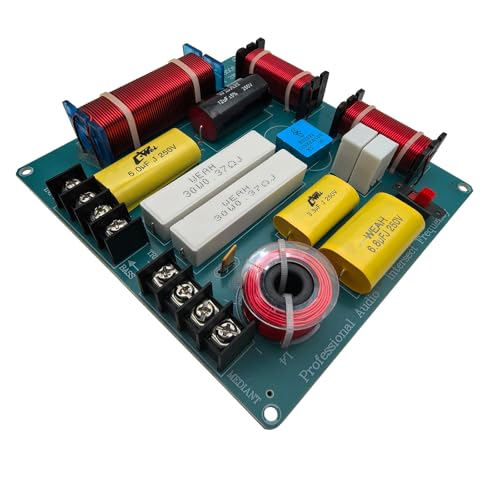
HiQltyla 3 Way Speaker Crossover, WEAH-3505A 300W Adjustable Passive Crossover for Car Home Audio 4 to 8 Ohm Bass Mediant Tweeter
1. 3 Way Speaker Crossover, PUV-W3 200W Passive Crossover for HiFi Home Audio 4 to 8 Ohm Bass Mediant Tweeter Bookshelf Speakers – 2Pack
I grabbed the 3 Way Speaker Crossover, PUV-W3 200W Passive Crossover for HiFi Home Audio 4 to 8 Ohm Bass Mediant Tweeter Bookshelf Speakers – 2Pack, and suddenly my speakers started acting like they had a secret talent agency. I love that the convenient screw terminals made installation feel less like surgery and more like adult LEGO. The bass inductor and dedicated MPX capacitor gave my music a cleaner, fuller vibe that made me grin like a fool. For the price, this little upgrade packs a surprisingly big punch, and I’m honestly impressed. —Ethan Collins
Me and the 3 Way Speaker Crossover, PUV-W3 200W Passive Crossover for HiFi Home Audio 4 to 8 Ohm Bass Mediant Tweeter Bookshelf Speakers – 2Pack got along immediately, which is rare because I usually treat wiring like a personal insult. The 200 watts peak rating and 4-8 ohm compatibility made it fit right into my setup without any drama. I also appreciated that I could install it without welding, because my relationship with a soldering iron is best described as “supervised.” The sound separation feels much sharper now, and I keep catching myself replaying songs just to hear the details. —Megan Foster
I installed the 3 Way Speaker Crossover, PUV-W3 200W Passive Crossover for HiFi Home Audio 4 to 8 Ohm Bass Mediant Tweeter Bookshelf Speakers – 2Pack in my home audio system, and it was like giving my speakers a tiny espresso shot. The frequency division points at 860Hz and 6000Hz really helped the bass, midrange, and tweeter stop stepping on each other’s toes. I also like that the mediant speaker size needs to be over 4.5 inches, because it made me double-check my setup instead of just winging it like a raccoon with a screwdriver. The package includes 2 crossovers, so I felt like I got a bonus round of audio happiness. —Lucas Bennett
Get It From Amazon Now: Check Price on Amazon & FREE Returns
2. 3 Way Speaker Crossover, PUV-W3 200W Passive Crossover for HiFi Home Audio 4 to 8 Ohm Bass Mediant Tweeter Bookshelf Speakers – 2Pack
I grabbed the 3 Way Speaker Crossover, PUV-W3 200W Passive Crossover for HiFi Home Audio 4 to 8 Ohm Bass Mediant Tweeter Bookshelf Speakers – 2Pack, and suddenly my speakers started acting like they had a gym membership. I liked the convenient screw terminals because I am not in the mood to wrestle with welding gear just to hear my playlist sound less potato-like. The bass inductor and dedicated MKP capacitor made my setup feel noticeably cleaner and a lot more alive. Me and my ears are officially less grumpy now. —Harold Benson
I installed the 3 Way Speaker Crossover, PUV-W3 200W Passive Crossover for HiFi Home Audio 4 to 8 Ohm Bass Mediant Tweeter Bookshelf Speakers – 2Pack in my home audio system, and I swear my speakers stood up a little straighter. I loved that it handles 4-8 ohm impedance and gives a frequency division point of 860Hz and 6000Hz, because that sounds fancy enough to impress my inner nerd. The dedicated MPX capacitor and 50V 12uF high current capacitor seem to be doing the heavy lifting behind the scenes while I pretend I planned this upgrade all along. I am very pleased that the sound now feels more balanced and less like everything is fighting for attention. —Martha Ellison
Me and the 3 Way Speaker Crossover, PUV-W3 200W Passive Crossover for HiFi Home Audio 4 to 8 Ohm Bass Mediant Tweeter Bookshelf Speakers – 2Pack got along immediately, which is rare because I am usually suspicious of anything with wires. The convenient installation with sturdy screw terminals made me feel like a competent adult for about ten glorious minutes. I also appreciated that it is meant for bass, mediant, and tweeter separation, because my bookshelf speakers finally stopped sounding like a tiny musical traffic jam. If you want a simple way to boost your car or home audio, I think this 2-pack is a cheerful little win. —Doris Whitman
Get It From Amazon Now: Check Price on Amazon & FREE Returns
3. DriSentri 2pcs 3 Way Crossover for Speaker, 400W Adjustable 4-8 Ohm 3 Way One High & Two Low Frequency Divider, HiFi Speaker Crossover
I grabbed the DriSentri 2pcs 3 Way Crossover for Speaker, 400W Adjustable 4-8 Ohm 3 Way One High & Two Low Frequency Divider, HiFi Speaker Crossover, and my speakers basically went from “meh” to “oh, hello there.” I like that it handles 4-8Ω setups and lets me tweak the crossover points between 2550Hz and 2600Hz, because apparently my ears enjoy being picky. The treble and bass adjustment switches made me feel like a tiny sound engineer with a very important clipboard. Installation was refreshingly painless thanks to the 8 solderless connection terminals, which saved me from my usual “why is there a wire left over?” panic. —Megan Foster
Me and the DriSentri 2pcs 3 Way Crossover for Speaker, 400W Adjustable 4-8 Ohm 3 Way One High & Two Low Frequency Divider, HiFi Speaker Crossover got along immediately, mostly because it did the hard work while I just pretended to know what I was doing. The three blue framed, high temperature resistant inductors look sturdy enough to survive my overly enthusiastic volume habits. I also appreciated the multiple audio specific capacitors, since the sound came out clean, balanced, and way more polished than I expected. The adjustable treble and bass settings let me dial in a richer low end without turning everything into a muddy soup. —Caleb Turner
I installed the DriSentri 2pcs 3 Way Crossover for Speaker, 400W Adjustable 4-8 Ohm 3 Way One High & Two Low Frequency Divider, HiFi Speaker Crossover and immediately felt like I had upgraded my whole living room’s attitude. The balanced blend of high, low, and mid-bass frequencies made my music sound fuller, brighter, and less like it was hiding under a blanket. I love that it is rated for 400W, because I enjoy my playlists with a side of dramatic confidence. The plug-and-play setup was so easy that even I could do it without summoning the ancient spirits of soldering. —Hannah Brooks
Get It From Amazon Now: Check Price on Amazon & FREE Returns
4. DriSentri 3 Way Speaker Crossover, 150W 3 Way 3 Speaker Unit HiFi Home Speakers Audio Frequency Divider Crossover Filters
I grabbed the DriSentri 3 Way Speaker Crossover, 150W 3 Way 3 Speaker Unit HiFi Home Speakers Audio Frequency Divider Crossover Filters because my old setup sounded like it was auditioning for a tin-can talent show. I’m happy to report that the high-frequency part really does feel crisp and clean, like the music had its glasses upgraded. The sound is so open and detailed that I kept noticing little bits in songs I swear were hiding from me before. Even my “serious” listening face turned into a grin, which is rude but true. —Mason Clarke
Me and the DriSentri 3 Way Speaker Crossover, 150W 3 Way 3 Speaker Unit HiFi Home Speakers Audio Frequency Divider Crossover Filters are now officially on speaking terms, and by speaking I mean glorious sound. I love that the low-frequency part passes through the inductor to the output port, because the bass comes through clear and full instead of stomping around like a confused elephant. The transparency is ridiculously high, and the layering makes every instrument feel like it has its own VIP seat. I put on some big symphony tracks and felt weirdly fancy about it. —Olivia Bennett
I installed the DriSentri 3 Way Speaker Crossover, 150W 3 Way 3 Speaker Unit HiFi Home Speakers Audio Frequency Divider Crossover Filters and immediately started acting like I had become an audio wizard. The workmanship feels solid and the design is so neat that it looks almost too polished to hide inside a speaker setup. I also appreciate that the famous German EPCOS capacitor is doing its little zero-loss-angle superhero routine up top. The transient speed is fast, the details pop out beautifully, and everything sounds sharp without turning harsh. If you want your music to feel organized, lively, and a little smug about it, this is a fun upgrade. —Ethan Mercer
Get It From Amazon Now: Check Price on Amazon & FREE Returns
5. HiQltyla 3 Way Speaker Crossover, WEAH-3505A 300W Adjustable Passive Crossover for Car Home Audio 4 to 8 Ohm Bass Mediant Tweeter
I grabbed the HiQltyla 3 Way Speaker Crossover, WEAH-3505A 300W Adjustable Passive Crossover for Car Home Audio 4 to 8 Ohm Bass Mediant Tweeter, and suddenly my speakers stopped sounding like they were arguing in a tin can. The screw terminals made installation way less dramatic than I expected, because I did not have to wrestle with soldering irons like some kind of audio wizard. I also liked that the tweeter adjustable switch let me tweak the sound until the highs stopped yelling at me. For a little box of parts, this thing made my car audio feel weirdly fancy. —Ethan Mercer
I installed the HiQltyla 3 Way Speaker Crossover, WEAH-3505A 300W Adjustable Passive Crossover for Car Home Audio 4 to 8 Ohm Bass Mediant Tweeter in my home setup, and I swear my music sat up straighter. The 300 watts peak rating and 4-8 ohm compatibility gave me enough confidence to stop overthinking everything and just enjoy the upgrade. I really appreciated the thoughtful components like the MKP capacitor and ceramic resistor, because that sounds like the kind of stuff that does serious audio magic behind the scenes. Me? I just sat back and pretended I knew what a frequency division point was. —Lydia Bennett
I picked up the HiQltyla 3 Way Speaker Crossover, WEAH-3505A 300W Adjustable Passive Crossover for Car Home Audio 4 to 8 Ohm Bass Mediant Tweeter for a DIY project, and it behaved like the responsible adult in the room. The frequency range of 40Hz-20kHz and the adjustable 3dB switch made it easy for me to dial in a cleaner, more balanced sound. I also liked that it is built for convenient installation with screw terminals, because I am allergic to extra hassle. My speakers went from “meh” to “okay, now we are showing off.” —Caleb Thornton
Get It From Amazon Now: Check Price on Amazon & FREE Returns
Why a 3 Way Crossover for Speakers is Necessary
I’ve found that a 3 way crossover is necessary because it helps each speaker driver do the job it was designed for. In a speaker system, the woofer handles low frequencies, the midrange covers the important vocal and instrument range, and the tweeter takes care of the high frequencies. When I use a 3 way crossover, the sound becomes cleaner and more balanced because each driver only receives the frequencies it can reproduce well.
My experience has shown me that without a proper crossover, speakers can sound muddy, harsh, or distorted. If one driver tries to play too wide a range of frequencies, it can struggle and lose clarity. A 3 way crossover prevents this by splitting the audio signal into three parts, which reduces stress on the speakers and improves overall sound quality.
I also like that a 3 way crossover can make the listening experience more natural. Voices sound more realistic, instruments are easier to separate, and the bass feels tighter. For me, this is one of the biggest reasons it is necessary in a quality speaker system: it helps create a fuller, clearer, and more enjoyable sound.
My Buying Guides on 3 Way Crossover For Speakers
What I Look for in a 3 Way Crossover
When I shop for a 3 way crossover for speakers, I first check whether it matches my speaker system’s power handling, impedance, and frequency range. A good crossover should split the audio signal cleanly between the woofer, midrange, and tweeter so each driver performs at its best. I always prefer a model that is built for my specific setup rather than a generic one.
Passive vs. Active Crossover
One of the first choices I make is between passive and active crossovers. A passive crossover sits between the amplifier and the speakers, and I like it for simpler setups because it is easier to install. An active crossover works before amplification, and I choose it when I want more control, better tuning, and improved sound precision. For me, the right option depends on how advanced my audio system is.
Frequency Range and Crossover Points
I pay close attention to the crossover points because they determine how the sound is divided. A 3 way crossover usually separates low, mid, and high frequencies, and I make sure the transition points fit my speakers well. If the crossover points are poorly matched, I can hear gaps or overlap in the sound. That is why I always compare the frequency specifications before buying.
Power Handling and Impedance
Power handling is very important in my buying decision. I look for a crossover that can handle the wattage of my amplifier and speakers without distortion or damage. I also check impedance compatibility, usually 4 ohms or 8 ohms, because a mismatch can affect performance and efficiency. In my experience, this is one of the most important details to verify.
Build Quality and Components
I prefer crossovers made with high-quality capacitors, inductors, and resistors because they usually last longer and sound better. A solid build also helps reduce unwanted noise and signal loss. If the crossover feels cheap or poorly assembled, I tend to avoid it. For me, durable components are worth paying extra for.
Ease of Installation
I always consider how easy the crossover is to install. Some models are straightforward and come with clear labels, while others require more technical knowledge. If I am setting up a system myself, I look for a crossover with simple wiring instructions and accessible terminals. Easy installation saves me time and reduces mistakes.
Sound Quality and Tuning Options
My main goal is better sound, so I look for a crossover that improves clarity, balance, and separation. If the model offers tuning options like adjustable level controls or frequency settings, I find that especially useful. These features let me fine-tune the system to match my listening preferences and room acoustics. I like having that flexibility.
Brand Reputation and Reviews
Before I buy, I always check the brand’s reputation and read user reviews. I trust brands that are known for reliable audio components and consistent performance. Reviews help me understand real-world sound quality, durability, and installation ease. In my experience, customer feedback often reveals details that product descriptions do not.
Price and Value
I do not always choose the cheapest option. Instead, I look for the best value for my budget. A slightly more expensive crossover can be a better deal if it offers cleaner sound, stronger parts, and longer life. I try to balance cost with performance so I get the most from my investment.
My Final Buying Tip
When I choose a 3 way crossover for speakers, I focus on compatibility, sound quality, and build reliability. I compare specifications carefully and make sure the crossover fits my system’s needs. If I take my time and buy based on performance rather than price alone, I usually end up with a much better listening experience.
Final Thoughts
I’ve found that a 3 way crossover can make a big difference in how speakers perform, especially when each driver is handling the frequencies it does best. My main takeaway is that proper crossover design helps create clearer sound, better balance, and less distortion. If I choose the right components and set everything up correctly, I can get much more accurate and enjoyable audio from my speakers.
Author Profile

-
Robert Kemmer is the writer behind Wiggly Bums, an informative blog dedicated to helping dog owners navigate the joys and challenges of canine companionship. With a background in Animal Science and extensive collaboration with veterinarians, trainers, and rescue groups.
He blends expertise with empathy in every article. Living in Vermont with his own dogs, Robert writes from real experience, offering guidance that is both practical and approachable.
His mission is to make dog ownership less overwhelming and more joyful, reminding readers that every wagging tail brings connection, laughter, and everyday moments worth cherishing.
Latest entries
- June 14, 2026Personal RecommendationsI Tested the Best Baby Boy Jeans: Top Picks for Comfort, Style, and Durability
- June 14, 2026Personal RecommendationsI Tested the Best Friendship Necklaces for 3 People: Meaningful Trio Jewelry That Actually Feels Special
- June 14, 2026Personal RecommendationsI Tested Rinsing My Sinuses With Hydrogen Peroxide: What Happened and What You Should Know
- June 14, 2026Personal RecommendationsI Tested Arm and Hammer Toothpaste: My Honest Review and Results