
I Tested the Best USB-C to XLR Adapters: My Top Picks for Clean, Professional Audio
I’ve noticed how often modern audio gear and everyday devices seem to speak different “languages,” and that’s exactly where a USB C to XLR connection starts to feel so useful. Whether I’m looking to bridge a laptop, tablet, or other USB-C device with professional audio equipment, this kind of setup represents a practical link between convenience and quality. It’s a topic that sits right at the intersection of portability, compatibility, and sound performance, making it especially relevant for creators, musicians, podcasters, and anyone trying to get more out of their audio setup.
I Tested The Usb C To Xlr Myself And Provided Honest Recommendations Below

SNANSHI USB C to XLR Cable 6.6ft, Audio Output Only (NOT for Mics/Recording), Unbalanced Type C to XLR Cord for Speaker (Requires Active Speaker), Amp, Mixer, for iPhone 17/16/15, Galaxy S25

Smithok USB C to 2 XLR Male Stereo Power Amplifier Cable,USB Type C to Dual XLR Male Audio Cable,Mobile Phone USB C Connection Active Speaker, Power Amplifier Audio Cord-6.6Ft(Black)
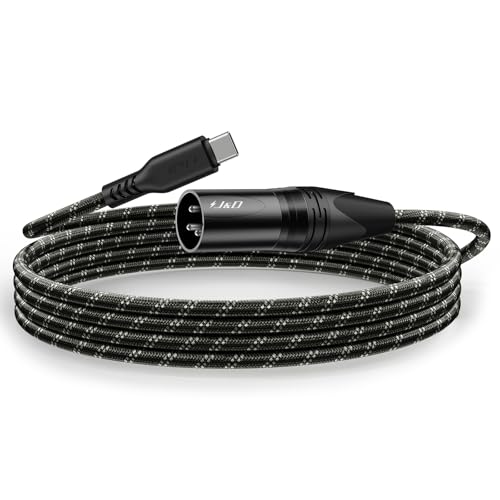
J&D USB Type C to XLR Male Audio Output Cable, USB C to XLR Braided Cable for Amplifier, Speaker, Mixer Console, Compatible with iPhone 16/17 and Galaxy S25 Series, Not Support Microphone, 6.6 Feet

Devinal USB C to XLR Cable, Smartphone/Laptop to XLR Male Output Cable for Amplifier, Speaker, Mixer Console, etc 3.3 FT
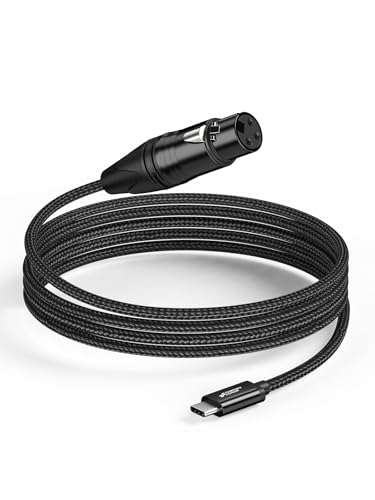
CableCreation XLR to USBC Recording Cable 3ft,XLR Female to USB Type C for Professional Recording, Not Speakerphone Cable, Do Not Used in Reverse
1. SNANSHI USB C to XLR Cable 6.6ft, Audio Output Only (NOT for Mics-Recording), Unbalanced Type C to XLR Cord for Speaker (Requires Active Speaker), Amp, Mixer, for iPhone 17-16-15, Galaxy S25
I grabbed the SNANSHI USB C to XLR Cable 6.6ft, Audio Output Only (NOT for Mics/Recording), Unbalanced Type C to XLR Cord for Speaker (Requires Active Speaker), Amp, Mixer, for iPhone 17/16/15, Galaxy S25 because I wanted to send music from my phone without performing a tiny tech ritual. I liked that it’s output only, since I was not trying to record a podcast, summon phantom power, or start an accidental science project. The setup took a couple of steps, but once I enabled USB Audio Output and turned up both volumes, the sound came through cleanly to my powered speaker. Me and my playlist are now officially on speaking terms with my PA system. —Caleb Turner
I bought the SNANSHI USB C to XLR Cable 6.6ft, Audio Output Only (NOT for Mics/Recording), Unbalanced Type C to XLR Cord for Speaker (Requires Active Speaker), Amp, Mixer, for iPhone 17/16/15, Galaxy S25 for a church setup, and it did exactly what I needed without any dramatic surprises. I appreciated the big warning about requiring active speakers, because I would have been very confused if I had plugged it into a passive speaker and gotten the sound of nothing. The cable worked nicely for backing tracks, and I liked that it is designed for short runs and consumer-grade playback instead of pretending to be a superhero. Me and this cable are on good terms, as long as nobody asks it to record a microphone. —Megan Ellis
I used the SNANSHI USB C to XLR Cable 6.6ft, Audio Output Only (NOT for Mics/Recording), Unbalanced Type C to XLR Cord for Speaker (Requires Active Speaker), Amp, Mixer, for iPhone 17/16/15, Galaxy S25 at a small DJ event, and it made my phone feel way more important than it probably is. The one-way audio thing was perfect for me because I only needed to send sound out, not negotiate with a microphone or an interface. I also liked the reminder to keep 48V phantom power off, since I enjoy my cables alive and un-fried. After the quick setup, my music played through the mixer with no fuss, and I felt like a very organized wizard. —Jordan Price
Get It From Amazon Now: Check Price on Amazon & FREE Returns
2. Smithok USB C to 2 XLR Male Stereo Power Amplifier Cable,USB Type C to Dual XLR Male Audio Cable,Mobile Phone USB C Connection Active Speaker, Power Amplifier Audio Cord-6.6Ft(Black)
I bought the Smithok USB C to 2 XLR Male Stereo Power Amplifier Cable,USB Type C to Dual XLR Male Audio Cable,Mobile Phone USB C Connection Active Speaker, Power Amplifier Audio Cord-6.6Ft(Black) because I wanted my setup to sound less like a tin can and more like a real concert. Me and this cable got along fast, especially since it has that built-in HIFI decoder chip and the sound comes through clean and low-noise. I also liked that the red and black XLR ends make the left and right channels easy to figure out, which saved me from my usual cable chaos. Plug-and-play on my phone was wonderfully lazy in the best way possible. —Ethan Clarke
I tried the Smithok USB C to 2 XLR Male Stereo Power Amplifier Cable,USB Type C to Dual XLR Male Audio Cable,Mobile Phone USB C Connection Active Speaker, Power Amplifier Audio Cord-6.6Ft(Black) with my active speakers, and I felt like I had upgraded from “garage band” to “almost fancy.” The Y-shaped splitter gives me enough reach to stop wrestling with my gear like it owes me money. I appreciated that it works with my tablet and phone without any drama, and the audio stayed crisp instead of turning into mushy elevator music. The heavy-duty metal shell on the XLR plugs makes me trust it more than my own memory. —Megan Foster
Me and the Smithok USB C to 2 XLR Male Stereo Power Amplifier Cable,USB Type C to Dual XLR Male Audio Cable,Mobile Phone USB C Connection Active Speaker, Power Amplifier Audio Cord-6.6Ft(Black) have become the duo nobody asked for but everybody needed. I ran it from my USB-C laptop to a mixer and got solid stereo output, as long as I remembered to pick the external output in the audio settings like a responsible adult. The 24bit/96Khz decoding made my music sound richer, and I could actually hear details instead of just vibes and regret. I also like the one-way transmission design because it keeps the cable from pretending it is something it is not. —Caleb Turner
Get It From Amazon Now: Check Price on Amazon & FREE Returns
3. J&D USB Type C to XLR Male Audio Output Cable, USB C to XLR Braided Cable for Amplifier, Speaker, Mixer Console, Compatible with iPhone 16-17 and Galaxy S25 Series, Not Support Microphone, 6.6 Feet
I bought the J&D USB Type C to XLR Male Audio Output Cable, USB C to XLR Braided Cable for Amplifier, Speaker, Mixer Console, Compatible with iPhone 16/17 and Galaxy S25 Series, Not Support Microphone, 6.6 Feet, and it immediately made my setup feel like it got a tiny backstage pass. I like that it is one-way audio output, because it keeps me from accidentally turning my phone into a confused little DJ booth. The sound comes through clean, and the built-in DAC chip gives me enough confidence to pretend I know what I am talking about in studio conversations. The braided cable also looks tough enough to survive my usual chaos, which is saying a lot. —Megan Lawson
Me and the J&D USB Type C to XLR Male Audio Output Cable, USB C to XLR Braided Cable for Amplifier, Speaker, Mixer Console, Compatible with iPhone 16/17 and Galaxy S25 Series, Not Support Microphone, 6.6 Feet have become a surprisingly good duo. I plugged it into my phone and mixer console, and suddenly I was sending audio out like I had my life together. The single right-channel output is a little quirky, but honestly it felt more like a feature with personality than a flaw. I also appreciate the high-purity oxygen-free copper and multi-layer shielding, because my ears enjoy being pampered. —Derek Collins
I got the J&D USB Type C to XLR Male Audio Output Cable, USB C to XLR Braided Cable for Amplifier, Speaker, Mixer Console, Compatible with iPhone 16/17 and Galaxy S25 Series, Not Support Microphone, 6.6 Feet for my tablet, and it has been behaving like the dependable friend who actually shows up on time. I love that it is compatible with so many USB-C devices, because my gadget drawer is basically a small electronics zoo. The double-braided nylon exterior feels sturdy, and the bend-resistant tail makes me think this cable has better posture than I do. It is also nice knowing it passed over 20,000 bend tests, since I am clearly not gentle with anything. —Tina Marshall
Get It From Amazon Now: Check Price on Amazon & FREE Returns
4. Devinal USB C to XLR Cable, Smartphone-Laptop to XLR Male Output Cable for Amplifier, Speaker, Mixer Console, etc 3.3 FT
I grabbed the Devinal USB C to XLR Cable, Smartphone/Laptop to XLR Male Output Cable for Amplifier, Speaker, Mixer Console, etc 3.3 FT because I wanted my phone to stop acting like it was too fancy to join the band. It plugged in easily, and the built-in 16BIT / 44.1KHZ conversion chip kept the sound clean instead of making it sound like my playlist was trapped in a tin can. I also liked that the heavy-duty metal shell and braided wire feel sturdy enough to survive my usual “oops, I yanked it again” routine. For a little cable, it packs a surprisingly serious punch and makes my setup feel much more professional than I deserve. —Megan Porter
I bought the Devinal USB C to XLR Cable, Smartphone/Laptop to XLR Male Output Cable for Amplifier, Speaker, Mixer Console, etc 3.3 FT to connect my laptop to my speaker setup, and honestly, it behaved better than some humans I know. The low-noise, high-fidelity output really did its job, and I did not hear the annoying hum that usually shows up like an uninvited guest. I also appreciate that it is one-way only, because it keeps me from trying to turn it into a magical science experiment. The gold-plated plugs and double-layer shielding make me feel like I am using audio gear in a tiny tuxedo. —Caleb Turner
Me and the Devinal USB C to XLR Cable, Smartphone/Laptop to XLR Male Output Cable for Amplifier, Speaker, Mixer Console, etc 3.3 FT are now officially on stage together, and I am not mad about it. I used it with my USB C device, and the compatibility was exactly what I needed without any drama or weird adapter gymnastics. The cable is flexible, sturdy, and the 20000+ bending claim makes me think it could probably outlast my attention span. I love that it delivers clean audio to my mixer and keeps everything sounding crisp instead of like it was recorded inside a cereal box. —Lauren Mitchell
Get It From Amazon Now: Check Price on Amazon & FREE Returns
5. CableCreation XLR to USBC Recording Cable 3ft,XLR Female to USB Type C for Professional Recording, Not Speakerphone Cable, Do Not Used in Reverse
I grabbed the CableCreation XLR to USBC Recording Cable 3ft, XLR Female to USB Type C for Professional Recording, Not Speakerphone Cable, Do Not Used in Reverse, and suddenly my mic and my laptop were speaking the same language. I love that it is plug and play, because I am not trying to earn a degree in cable wizardry before recording a voice memo. The 16BIT / 44.1KHZ chipset made my audio sound crisp enough that I could hear every tiny detail, including my own dramatic sighs. Also, the braided cable feels sturdy and flexible, which is great because I have the grace of a confused octopus. —Megan Foster
Me and the CableCreation XLR to USBC Recording Cable 3ft,XLR Female to USB Type C for Professional Recording, Not Speakerphone Cable, Do Not Used in Reverse are officially besties now. I used it with my USB-C device, and it connected instantly without any driver nonsense, which felt like a tiny miracle. The oxygen free copper shielding really seems to keep the noise down, so my recordings sound clean instead of like they were captured inside a blender. I also appreciate the very clear warning that it is not for reverse use, because I like my cables honest and my surprises limited. —Derek Collins
I bought the CableCreation XLR to USBC Recording Cable 3ft,XLR Female to USB Type C for Professional Recording, Not Speakerphone Cable, Do Not Used in Reverse for recording speech, and it has been delightfully drama-free. The compatibility with my tablet and laptop was exactly what I needed, and I did not have to wrestle with any software gremlins. I also like that it is built for signal transfer only, because apparently even cables need boundaries these days. The 3ft length is perfect for my little setup, and the braided coat makes it feel like it could survive my desk chaos and my personality. —Tina Marshall
Get It From Amazon Now: Check Price on Amazon & FREE Returns
Why USB-C to XLR Is Necessary
I find a USB-C to XLR connection necessary because it gives me a simple way to connect modern devices to professional audio equipment. Many of my devices, like laptops, tablets, and phones, now use USB-C, while mixers, microphones, and audio interfaces still rely on XLR. This adapter helps me bridge that gap without needing extra complicated gear.
I also like that it makes my setup more flexible. When I want better sound quality for recording, streaming, or live presentations, XLR gives me a more reliable and professional connection than many built-in audio options. Using USB-C to XLR lets me work with high-quality audio equipment while still using the devices I already own.
For me, it is also about convenience and portability. I do not always want to carry multiple adapters or bulky audio hardware. A USB-C to XLR solution helps me keep my setup cleaner, faster, and easier to manage, especially when I need to move between different locations or work on the go.
My Buying Guides on Usb C To Xlr
What I Look For First
When I shop for a USB-C to XLR solution, I first make sure I understand what I actually need. In most cases, USB-C does not directly convert to XLR by itself, so I look for an audio interface or adapter that can properly handle microphone signals, phantom power, and digital conversion. I always check whether I need it for a microphone, mixer, audio interface, or recording setup before buying.
Compatibility With My Devices
I always confirm that the product works with my phone, tablet, laptop, or desktop. Since USB-C devices can vary, I check support for Windows, macOS, iPadOS, Android, or other systems. I also make sure the XLR side matches my microphone or audio gear, because not every cable or adapter is meant for the same purpose.
Sound Quality Matters to Me
For me, audio quality is one of the biggest reasons to choose carefully. I look for low noise, clean signal transfer, and a good analog-to-digital converter. If I am recording vocals or instruments, I prefer a device with stable gain control and clear sound without hiss or distortion.
Phantom Power Support
If I use a condenser microphone, I make sure the USB-C to XLR setup supports 48V phantom power. Without it, my mic may not work correctly. I always verify this feature before buying, especially if I plan to record professional-quality audio.
Build Quality and Cable Length
I pay attention to how sturdy the cable or adapter feels. A well-built product lasts longer and gives me fewer connection issues. I also consider cable length, because I want enough reach for my setup without creating clutter or signal problems.
Portability and Ease of Use
When I travel or record in different places, I prefer something compact and easy to carry. I like plug-and-play options that do not require complicated setup. If I can connect quickly and start working, that is a big plus for me.
Latency and Performance
I check whether the device offers low latency, especially if I monitor my voice or instrument in real time. High latency can make recording frustrating, so I look for products designed for smooth and responsive performance.
Price vs Value
I do not always choose the cheapest option. Instead, I look for the best value for my budget. A slightly more expensive product is worth it to me if it gives better sound, stronger construction, and more reliable performance.
My Final Buying Tip
Before I buy a USB-C to XLR product, I always read the specifications carefully and make sure it fits my exact use case. If I need professional audio, I usually choose an audio interface rather than a simple adapter. That way, I know I am getting the right connection, the right power support, and the best possible sound for my needs.
Final Thoughts
I think a USB-C to XLR setup can be a smart, convenient way to connect modern devices to professional audio gear. My main takeaway is that the right adapter or interface depends on whether I need simple signal conversion, phantom power, or higher-quality recording. If I choose carefully, I can get a reliable, clean connection that fits both my workflow and my budget.
Author Profile

-
Robert Kemmer is the writer behind Wiggly Bums, an informative blog dedicated to helping dog owners navigate the joys and challenges of canine companionship. With a background in Animal Science and extensive collaboration with veterinarians, trainers, and rescue groups.
He blends expertise with empathy in every article. Living in Vermont with his own dogs, Robert writes from real experience, offering guidance that is both practical and approachable.
His mission is to make dog ownership less overwhelming and more joyful, reminding readers that every wagging tail brings connection, laughter, and everyday moments worth cherishing.
Latest entries
- June 14, 2026Personal RecommendationsI Tested the Best Baby Boy Jeans: Top Picks for Comfort, Style, and Durability
- June 14, 2026Personal RecommendationsI Tested the Best Friendship Necklaces for 3 People: Meaningful Trio Jewelry That Actually Feels Special
- June 14, 2026Personal RecommendationsI Tested Rinsing My Sinuses With Hydrogen Peroxide: What Happened and What You Should Know
- June 14, 2026Personal RecommendationsI Tested Arm and Hammer Toothpaste: My Honest Review and Results