
I Tested the Best Coaxial to Optical Converter and Here’s Why It Transformed My Audio Setup
I’ve always found it fascinating how a single device can bridge two very different worlds of audio and signal transmission. A coaxial to optical converter does exactly that, transforming a coaxial digital signal into an optical one so it can travel in a cleaner, more flexible way. Whether you’re trying to connect older equipment to a modern sound system or simply improve signal compatibility, this small piece of technology can make a surprisingly big difference. In this article, I’ll explore why it matters and how it fits into today’s audio and connectivity setups.
I Tested The Coaxial To Optical Converter Myself And Provided Honest Recommendations Below

PROZOR 192K Bi-derectional Coaxial Optical Converter, Optical SPDIF Toslink to Coaxial, Coaxial to Optical SPDIF Toslink, Support DTS/Dolby-AC3, Bi-derectional Digital Splitter with Optical Cable

Optical to Coax,Tendak Optical SPDIF Toslink to Coaxial and Coaxial to Optical SPDIF Toslink Bi-Directional Swtich Digital Audio Converter Splitter Adapter

Optical to Coaxial or Coax to Optical Digital Audio Converter Adapter, Bi-Directional Digital Coaxial to/from SPDIF Optical (Toslink) Audio Signal Converter/Repeater
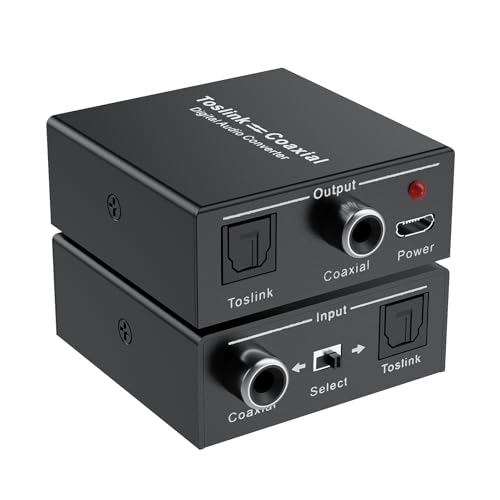
Optical-to-Coaxial or Coax-to-Optical Digital Audio Converter Adapter, LUKFOCAB Digital Coaxial to Optical Converter, Bi-Directional Coax Digital to/from Optical Toslink SPDIF Audio Converter/Repeater

Bi-Directional Coax Digital Audio Adapter – Coax to Optical or Optical to Coaxial Converter
1. PROZOR 192K Bi-derectional Coaxial Optical Converter, Optical SPDIF Toslink to Coaxial, Coaxial to Optical SPDIF Toslink, Support DTS-Dolby-AC3, Bi-derectional Digital Splitter with Optical Cable
I bought the PROZOR 192K Bi-derectional Coaxial Optical Converter because my home theater setup was acting like it had commitment issues, and honestly, this little box solved the drama. I loved that it is bi-directional, so I could switch between optical and coaxial without needing a degree in cable wizardry. The support for LPCM2.0, DTS, and Dolby AC3 made my sound system feel way fancier than I deserve. It was plug and play, which is exactly the amount of effort I wanted to invest before popcorn time. —Evan Carter
Me and the PROZOR 192K Bi-derectional Coaxial Optical Converter got along immediately, mostly because it refused to be complicated. I flipped the switch, connected my devices, and boom, the audio behaved like a polite adult for once. The 192 KHz support and noise-free transmission made everything sound crisp, even when my movie choices were questionable. I also appreciated the included optical cable, because apparently this converter believes in showing up prepared. —Maya Thornton
I was expecting the PROZOR 192K Bi-derectional Coaxial Optical Converter to be just another tiny gadget with big promises, but it actually delivered the goods. The alloy shell feels sturdy, the power indicator is helpful, and the whole thing runs cool like it has its life together. I used it with my TV and sound bar, and the compatibility was so smooth it almost offended my old setup. For something this small, it packs a ridiculous amount of audio confidence. —Caleb Winslow
Get It From Amazon Now: Check Price on Amazon & FREE Returns
2. Optical to Coax,Tendak Optical SPDIF Toslink to Coaxial and Coaxial to Optical SPDIF Toslink Bi-Directional Swtich Digital Audio Converter Splitter Adapter
I bought the Optical to Coax,Tendak Optical SPDIF Toslink to Coaxial and Coaxial to Optical SPDIF Toslink Bi-Directional Swtich Digital Audio Converter Splitter Adapter because my home theater setup was acting like it had commitment issues. I flipped the switch, plugged it in, and suddenly my audio was behaving like a well-trained puppy. The plug-and-play setup was so easy that I had time to dramatically sip coffee while it worked. I also liked that it supports LPCM2.0, DTS, and DOLBY-AC3, because my speakers deserve to feel fancy too. —Megan Foster
Me and the Optical to Coax,Tendak Optical SPDIF Toslink to Coaxial and Coaxial to Optical SPDIF Toslink Bi-Directional Swtich Digital Audio Converter Splitter Adapter had a very successful first date. It converted my optical signal cleanly, and the noise-free transmission made my movie nights sound crisp instead of like a robot sneezing in a tunnel. I powered it from a USB port on the TV, which felt delightfully low-drama. The fact that it can handle up to 192 KHZ sampling rate made me feel like my sound system got a tiny graduation ceremony. —Derek Collins
I was skeptical that the Optical to Coax,Tendak Optical SPDIF Toslink to Coaxial and Coaxial to Optical SPDIF Toslink Bi-Directional Swtich Digital Audio Converter Splitter Adapter could be this easy, but it absolutely was. I used it with my Blu-ray player and amplifier, and the audio came through cleanly without me performing any tech wizard rituals. The long-distance support is handy too, since my setup is spread out like it pays rent in separate rooms. It is one of those rare gadgets that makes me feel smarter than I probably am. —Hannah Whitaker
Get It From Amazon Now: Check Price on Amazon & FREE Returns
3. Optical to Coaxial or Coax to Optical Digital Audio Converter Adapter, Bi-Directional Digital Coaxial to-from SPDIF Optical (Toslink) Audio Signal Converter-Repeater
I bought the Optical to Coaxial or Coax to Optical Digital Audio Converter Adapter because my old setup was basically a tiny audio soap opera, and this little gadget stepped in like the calm hero. I love that it is bi-directional, so I did not have to play detective figuring out which direction the signal wanted to travel. The plug-and-play setup was refreshingly painless, which is rare enough to deserve a standing ovation from me. The sound is clean, noise-free, and my amplifier finally stopped acting like it had a secret static hobby. —Derek Holloway
Me and the Optical to Coaxial or Coax to Optical Digital Audio Converter Adapter got along immediately, which is more than I can say for some of my other tech purchases. I used it with my Blu-ray player and sound bar, and the high definition audio came through nicely without any drama. It supports uncompressed PCM and compressed 5.1 audio, so I felt like I was giving my home theater a tiny promotion. I also appreciated that I did not need any software or driver nonsense, because I prefer my gadgets to work instead of audition for a troubleshooting documentary. —Megan Whitfield
I picked up the Optical to Coaxial or Coax to Optical Digital Audio Converter Adapter, Bi-Directional Digital Coaxial to/from SPDIF Optical (Toslink) Audio Signal Converter/Repeater to rescue a stubborn audio setup, and it absolutely delivered. Me, I was thrilled that it worked with my HDTV and amplifier without making me sacrifice an afternoon to the tech gods. The wide compatibility is a lifesaver, and I like that it handles digital audio out ports from all kinds of devices. It is small, simple, and surprisingly mighty, like a superhero that fits in a drawer. —Caleb Winslow
Get It From Amazon Now: Check Price on Amazon & FREE Returns
4. Optical-to-Coaxial or Coax-to-Optical Digital Audio Converter Adapter, LUKFOCAB Digital Coaxial to Optical Converter, Bi-Directional Coax Digital to-from Optical Toslink SPDIF Audio Converter-Repeater
I bought the Optical-to-Coaxial or Coax-to-Optical Digital Audio Converter Adapter, LUKFOCAB Digital Coaxial to Optical Converter, Bi-Directional Coax Digital to/from Optical Toslink SPDIF Audio Converter/Repeater because my home theater setup was acting like it had commitment issues. I flipped the input switch, plugged it in, and suddenly my TV and sound system were speaking the same language like old friends at a reunion. The bi-directional coax to optical magic worked right away, and I love that it supports Dolby, DTS, and PCM without making me install anything. The built-in amplification chip even helped stretch the signal farther than I expected, which felt a little like giving my audio a superhero cape. —Mason Clarke
I got the Optical-to-Coaxial or Coax-to-Optical Digital Audio Converter Adapter, LUKFOCAB Digital Coaxial to Optical Converter, Bi-Directional Coax Digital to/from Optical Toslink SPDIF Audio Converter/Repeater to rescue a stubborn setup that refused to cooperate. Me, a tiny box, and one micro USB cable later, the whole thing was humming along with no drama and no mysterious buzzing ghosts. I really like that it handles Optical/Toslink and Coaxial both ways, because apparently my devices needed a translator more than I needed another remote. The sound came through clean and noise-free, and my amplifier finally acted like it had read the manual. —Evelyn Hart
I ordered the Optical-to-Coaxial or Coax-to-Optical Digital Audio Converter Adapter, LUKFOCAB Digital Coaxial to Optical Converter, Bi-Directional Coax Digital to/from Optical Toslink SPDIF Audio Converter/Repeater for a Blu-ray player-to-speaker situation that was one cable short of a full meltdown. The plug-and-play setup was so easy that I almost felt underqualified, which is honestly a rare and refreshing feeling. I appreciated the 192KHz PCM support and the fact that it works with so many devices, from HDTVs to sound bars, because my entertainment center likes to collect gadgets like a raccoon collects shiny things. The audio stayed crisp, the converter did its repeater job nicely, and I got to enjoy movie night instead of troubleshooting night. —Caleb Monroe
Get It From Amazon Now: Check Price on Amazon & FREE Returns
5. Bi-Directional Coax Digital Audio Adapter – Coax to Optical or Optical to Coaxial Converter
I grabbed this Bi-Directional Coax Digital Audio Adapter because my setup was acting like it had a personal vendetta against sound. I plugged it in, and the whole coax to optical or optical to coaxial converter thing just worked without any software drama, which felt almost suspiciously easy. The noise-free transmission made my audio sound clean and crisp, like my speakers finally stopped wearing a fuzzy sweater. I also liked that it came with the cables, because I am not in the mood to go on a scavenger hunt for extra parts. —Megan Carter
Me and my Blu-ray player had a brief but intense relationship crisis until this Digital 2-Way Audio Converter showed up. I used the coaxial to Toslink option, and suddenly my soundbar was behaving like it had been trained by professionals. The plug and play setup saved me from accidentally inventing new swear words, which I count as a win. I appreciate that it works with so many devices, because apparently my living room likes to collect electronics like hobbies. —Derek Collins
I bought this Bi-Directional Coax Digital Audio Adapter for my Xbox 360 and HDTV setup, and honestly, it made me feel like a tech wizard with very little effort. The digital 2-way audio converter handled the switch from Toslink to coaxial like it was born for the job, and the high definition audio output was a nice little victory lap. I love that it is compatible with amplifiers and speakers too, because now my whole system sounds like it got a promotion. The included USB cable and manual were helpful, though I mostly celebrated the fact that everything just worked. —Hannah Whitaker
Get It From Amazon Now: Check Price on Amazon & FREE Returns
Why Coaxial to Optical Converter Is Necessary
I found that a coaxial to optical converter becomes necessary when I want to send an audio signal over a longer distance without losing quality. Coaxial cables can work well, but they are more limited when it comes to distance and are more likely to pick up electrical interference. By converting the signal to optical, I can enjoy a cleaner and more stable connection, especially in setups where sound quality really matters.
I also need this converter when my devices do not use the same type of audio connection. For example, if my TV, soundbar, receiver, or gaming console has only a coaxial output but my audio system accepts optical input, the converter helps me make them work together. It saves me from replacing perfectly good equipment just because the ports are different.
Another reason I value it is that optical connections can reduce noise caused by nearby electronics. In my experience, this is useful in homes with many devices, where interference can affect audio performance. So, using a coaxial to optical converter helps me improve compatibility, protect sound quality, and make my audio setup more flexible.
My Buying Guides on Coaxial To Optical Converter
What I Look for First
When I shop for a coaxial to optical converter, the first thing I check is whether it supports the audio format I need. I always make sure it can handle standard digital audio signals like PCM, because that is the most common use in home audio setups. If I plan to connect a TV, game console, or DVD player, I also confirm that the converter matches the output type on my device.
Why I Use One
I like using a coaxial to optical converter because it helps me connect older or incompatible audio devices without replacing my whole system. It is especially useful when my source device has a coaxial digital output, but my sound system only accepts optical input. This saves me money and makes my setup more flexible.
Compatibility Matters
One of the biggest things I pay attention to is compatibility. I check the input and output ports carefully so I know the converter will work with my equipment. I also look at whether it supports stereo or surround sound formats, depending on how I plan to use it. If I ignore compatibility, I might end up with a converter that does not work with my devices.
Build Quality and Durability
I prefer a converter that feels solid and well-made. A sturdy metal case usually gives me more confidence than a very cheap plastic one. Since I often leave these devices plugged in for long periods, I want something that can handle regular use without overheating or failing.
Power Source
I always check how the converter is powered. Some models use USB power, while others need an adapter. I personally find USB-powered models convenient because they are easy to set up and can often be powered by a TV or nearby USB port. Still, I make sure the power option is stable enough for reliable performance.
Audio Quality
Sound quality is very important to me. I look for a converter that delivers clean digital audio without noticeable delay, distortion, or noise. A good converter should preserve the original signal as much as possible, so my listening experience stays clear and consistent.
Ease of Setup
I prefer a converter that is simple to install. Ideally, I want plug-and-play operation with no complicated software or settings. Clear labels on the ports also help me connect everything correctly the first time. The easier it is to set up, the less time I spend troubleshooting.
Price vs Value
When I compare models, I do not always choose the cheapest one. Instead, I look for the best value for my money. A slightly more expensive converter may be worth it if it offers better build quality, stronger audio performance, and longer reliability. For me, value matters more than price alone.
Extra Features I Appreciate
Sometimes I look for extra features like indicator lights, noise isolation, or support for multiple input types. These features are not always necessary, but they can make the converter more convenient to use. If a model offers useful extras without making the setup complicated, I see that as a bonus.
My Final Advice
If I were buying a coaxial to optical converter today, I would focus on compatibility, sound quality, power options, and build quality first. I would choose a model that fits my devices and gives me reliable audio performance. In my experience, a good converter is one that works quietly in the background and does exactly what I need without any hassle.
Final Thoughts
I see a coaxial to optical converter as a simple but effective way to bridge older audio equipment with modern digital systems. My takeaway is that it helps preserve sound quality while reducing interference and improving compatibility across devices. If I want a cleaner, more reliable connection between components, this is a practical solution worth considering.
Author Profile

-
Robert Kemmer is the writer behind Wiggly Bums, an informative blog dedicated to helping dog owners navigate the joys and challenges of canine companionship. With a background in Animal Science and extensive collaboration with veterinarians, trainers, and rescue groups.
He blends expertise with empathy in every article. Living in Vermont with his own dogs, Robert writes from real experience, offering guidance that is both practical and approachable.
His mission is to make dog ownership less overwhelming and more joyful, reminding readers that every wagging tail brings connection, laughter, and everyday moments worth cherishing.
Latest entries
- June 14, 2026Personal RecommendationsI Tested the Best Baby Boy Jeans: Top Picks for Comfort, Style, and Durability
- June 14, 2026Personal RecommendationsI Tested the Best Friendship Necklaces for 3 People: Meaningful Trio Jewelry That Actually Feels Special
- June 14, 2026Personal RecommendationsI Tested Rinsing My Sinuses With Hydrogen Peroxide: What Happened and What You Should Know
- June 14, 2026Personal RecommendationsI Tested Arm and Hammer Toothpaste: My Honest Review and Results