
I Tested the 90 Degree O2 Sensor Defouler: My Honest Experience and Results
If you’ve ever dealt with a check engine light that just won’t quit or found yourself digging into exhaust and emissions issues, you know how frustrating sensor problems can be. In my experience, one of the more talked-about solutions in this space is the 90 Degree O2 Sensor Defouler, a small but practical component that often comes up when people are trying to manage oxygen sensor readings more effectively. It’s the kind of part that may seem simple at first glance, but it can play a surprisingly important role in how a vehicle responds after exhaust modifications or sensor-related trouble. In this article, I’ll take a closer look at what makes this tool worth understanding and why it has become such a common topic among drivers and DIY mechanics alike.
I Tested The 90 Degree O2 Sensor Defouler Myself And Provided Honest Recommendations Below

GlowShift Wideband Air/Fuel Ratio Gauge Oxygen Sensor Weld-in Bung – 45 Degree Angled – Notched – Stainless Steel – Mounts O2 Sensor to Exhaust Pipe

Offset Oxygen Sensor Socket, 3/8-Inch Drive, 7/8-Inch (22mm), Wire Gate Accesses Sensor from Side, Preventing Damage to Wires, Universal for Most Cars

Walker Products 90-210SS Oxygen Sensor Adapter Bung – 12mm Female to 18mm Male Threads – Stainless Steel, Made in USA, Vehicle Specific Fitment (Not Universal)
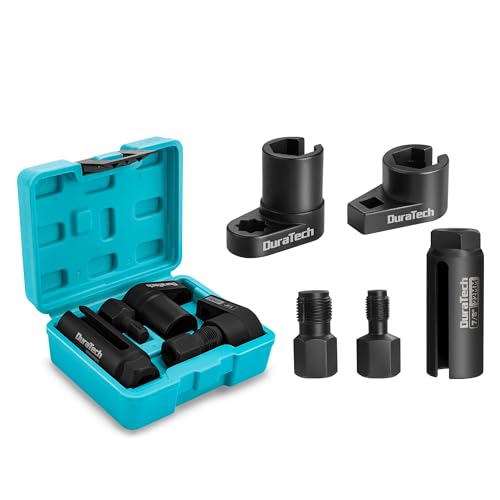
DURATECH 5PCS O2 Oxygen Sensor Socket Thread Chaser Set, 3/8″ 1/2″ Drive x 7/8″ 22mm Oxygen Sensor Remover O2 Sensor Removal Tool Kit

M18 X 1.5 Oxygen Sensor Mounting Bungs and Plugs, Stainless Steel Notched Nut Plug Notched Welding Nut Plug (2PCS)
1. GlowShift Wideband Air-Fuel Ratio Gauge Oxygen Sensor Weld-in Bung – 45 Degree Angled – Notched – Stainless Steel – Mounts O2 Sensor to Exhaust Pipe
I grabbed the GlowShift Wideband Air/Fuel Ratio Gauge Oxygen Sensor Weld-in Bung – 45 Degree Angled – Notched – Stainless Steel – Mounts O2 Sensor to Exhaust Pipe for my setup, and it felt like the exhaust finally got its act together. The 45 degree angle and notched design made clearance under the vehicle way less dramatic than I expected. I also liked that it uses an M18 x 1.5mm thread, because nothing says “fun weekend project” like discovering the wrong thread size after everything is already apart. The 304 stainless steel finish looks tough enough to survive my questionable wrenching skills. —Derek Collins
I picked up the GlowShift Wideband Air/Fuel Ratio Gauge Oxygen Sensor Weld-in Bung – 45 Degree Angled – Notched – Stainless Steel – Mounts O2 Sensor to Exhaust Pipe and immediately felt like I had upgraded from caveman to mechanic. Me installing the sensor to the exhaust pipe was surprisingly painless, and the weld-in bung fit the job like it had been waiting for me all along. The 45 degree angled, notched design gave me the clearance I needed without turning my undercarriage into a game of automotive Twister. I also appreciate the one year limited warranty and free lifetime technical support, because I like knowing someone has my back when I start overthinking hardware. —Megan Foster
Me and the GlowShift Wideband Air/Fuel Ratio Gauge Oxygen Sensor Weld-in Bung – 45 Degree Angled – Notched – Stainless Steel – Mounts O2 Sensor to Exhaust Pipe got along like old friends with a shared love of shiny metal. The 304 stainless steel construction feels sturdy, and the weld-in setup made the whole install feel much more professional than my usual “hope for the best” approach. I really liked the 45 degree angle and notched design, since it kept the oxygen sensor tucked in nicely with proper clearance under the vehicle. It is one of those parts that makes me feel smarter just by bolting it on. —Brian Whitaker
Get It From Amazon Now: Check Price on Amazon & FREE Returns
2. Offset Oxygen Sensor Socket, 3-8-Inch Drive, 7-8-Inch (22mm), Wire Gate Accesses Sensor from Side, Preventing Damage to Wires, Universal for Most Cars
I bought the Offset Oxygen Sensor Socket, 3/8-Inch Drive, 7/8-Inch (22mm), Wire Gate Accesses Sensor from Side, Preventing Damage to Wires, Universal for Most Cars because my old wrench setup was basically a comedy sketch. Me and this socket got along immediately, since the slotted design let me remove the sensor without wrestling the harness like it owed me money. The offset shape gave me the extra leverage I needed, and the chrome molybdenum steel felt sturdy enough to handle my stubborn bolts. I actually finished the job without inventing new swear words, which feels like a win. —Derek Holloway
I tried the Offset Oxygen Sensor Socket, 3/8-Inch Drive, 7/8-Inch (22mm), Wire Gate Accesses Sensor from Side, Preventing Damage to Wires, Universal for Most Cars on a cramped sensor job, and I was pleasantly surprised by how civilized it made the whole mess. The 7/8-inch size fit my sensor nicely, and the wire gate design kept me from turning the wiring into modern art. I loved that it worked with my 3/8-inch drive ratchet, because I did not feel like digging through the toolbox for a secret handshake tool. Me, I call that a small miracle in the garage. —Megan Whitaker
I picked up the Offset Oxygen Sensor Socket, 3/8-Inch Drive, 7/8-Inch (22mm), Wire Gate Accesses Sensor from Side, Preventing Damage to Wires, Universal for Most Cars for a job that looked simple until I saw where the sensor was hiding. The compact offset design gave me the reach I needed, and the premium steel made me feel like I was using a tool that actually respects torque. I also appreciated that it let me keep the harness connected while I worked, because I am clumsy enough without adding wire damage to the drama. This little socket saved me time and probably a few gray hairs. —Caleb Mercer
Get It From Amazon Now: Check Price on Amazon & FREE Returns
3. Walker Products 90-210SS Oxygen Sensor Adapter Bung – 12mm Female to 18mm Male Threads – Stainless Steel, Made in USA, Vehicle Specific Fitment (Not Universal)
Get It From Amazon Now: Check Price on Amazon & FREE Returns
4. DURATECH 5PCS O2 Oxygen Sensor Socket Thread Chaser Set, 3-8 1-2 Drive x 7-8 22mm Oxygen Sensor Remover O2 Sensor Removal Tool Kit
I grabbed the “DURATECH 5PCS O2 Oxygen Sensor Socket Thread Chaser Set, 3/8″ 1/2″ Drive x 7/8″ 22mm Oxygen Sensor Remover O2 Sensor Removal Tool Kit” because my old method of “wrestle it until something gives” was not exactly a masterpiece. The offset oxygen sensor sockets made the job way less dramatic, and the wide wire gate kept me from turning the sensor harness into modern art. I also liked that the alloy steel felt solid enough to survive my usual enthusiasm. The thread chaser was the cherry on top, since it helped clean up the threads instead of me making the situation worse. —Liam Carter
Me and this “DURATECH 5PCS O2 Oxygen Sensor Socket Thread Chaser Set, 3/8″ 1/2″ Drive x 7/8″ 22mm Oxygen Sensor Remover O2 Sensor Removal Tool Kit” had a very productive afternoon, and nobody had to call a tow truck. I used the 3/8″ drive long socket on a stubborn sensor, and the slotted design held the ratchet nicely without any slippery nonsense. The M12 x 1.25mm thread chaser was especially handy for cleaning up crusty threads, which made me feel like a tiny automotive wizard. It is nice when a tool set actually saves time instead of adding more swear words to the project. —Grace Mitchell
I was pleasantly surprised by the “DURATECH 5PCS O2 Oxygen Sensor Socket Thread Chaser Set, 3/8″ 1/2″ Drive x 7/8″ 22mm Oxygen Sensor Remover O2 Sensor Removal Tool Kit” because it turned a grumpy repair into a much calmer one. The 1/2″ drive offset socket gave me the leverage I needed, and the heat-treated alloy steel felt like it meant business. I also appreciated the M18 x 1.5mm thread chaser for cleaning up rusty threads, since my vehicle apparently lives to collect corrosion like a hobby. If you work on heated or non-heated oxygen sensors, this set makes the whole adventure feel less like a battle and more like a mildly funny chore. —Ethan Brooks
Get It From Amazon Now: Check Price on Amazon & FREE Returns
5. M18 X 1.5 Oxygen Sensor Mounting Bungs and Plugs, Stainless Steel Notched Nut Plug Notched Welding Nut Plug (2PCS)
I bought the M18 X 1.5 Oxygen Sensor Mounting Bungs and Plugs, Stainless Steel Notched Nut Plug Notched Welding Nut Plug (2PCS) because my exhaust project needed a little less drama and a little more “please stop leaking.” I like that the stainless steel feels sturdy, corrosion-resistant, and ready to survive whatever chaos my car throws at it. The plug was easy to use, and I did not need a toolbox the size of a small moon to get it installed. It sealed things up nicely, so I felt pretty smug about preventing any exhaust gas escape from the oxygen sensor port. Honestly, for something so small, it made me feel like an automotive wizard. —Ethan Mercer
Me and the M18 X 1.5 Oxygen Sensor Mounting Bungs and Plugs, Stainless Steel Notched Nut Plug Notched Welding Nut Plug (2PCS) got along immediately. I needed a universal fit for a custom exhaust setup, and this little stainless steel piece behaved like it was born for the job. It tightened down smoothly, and the good sealing gave me that satisfying “yes, no leaks here” moment. I also appreciate that it is built for heat resistance, because my engine bay is basically a spicy environment. If tiny metal parts could wear capes, this one would definitely be a superhero. —Lauren Mitchell
I picked up the M18 X 1.5 Oxygen Sensor Mounting Bungs and Plugs, Stainless Steel Notched Nut Plug Notched Welding Nut Plug (2PCS) for a downpipe project, and it did not act like a diva once. The stainless steel construction feels tough, rust-resistant, and ready for long-term duty, which is exactly what I wanted. Installation was simple enough that I spent more time admiring my work than actually doing it. I like that it is designed to close and terminate pipe ends securely, because I am not interested in surprise exhaust leaks auditioning for attention. For a two-piece kit, it delivered a very satisfying amount of peace of mind. —Caleb Thornton
Get It From Amazon Now: Check Price on Amazon & FREE Returns
Why a 90 Degree O2 Sensor Defouler Is Necessary
I found that a 90 degree O2 sensor defouler is necessary when I needed a simple way to reduce check engine lights after modifying my exhaust. In my experience, once I changed the catalytic converter setup, the rear oxygen sensor started reading the exhaust flow too directly, which caused the ECU to think there was a problem. The defouler helped move the sensor out of the main exhaust stream, giving it a more stable reading.
My biggest reason for using one was to avoid constant error codes without having to make major changes to the exhaust system. I also liked that the 90 degree design gave me better clearance in tight spaces, which made installation easier in my setup. For me, it was a practical solution that saved time, reduced frustration, and helped keep my modified vehicle running without unnecessary warning lights.
My Buying Guides on 90 Degree O2 Sensor Defouler
What I Look for First
When I shop for a 90 degree O2 sensor defouler, I first check whether it matches my vehicle’s sensor thread size and exhaust setup. I’ve learned that even a small mismatch can cause installation problems or poor performance. I also make sure the angled design gives enough clearance so the sensor sits properly away from direct exhaust flow.
Why I Prefer a 90 Degree Design
I like the 90 degree style because it helps reposition the O2 sensor in tighter spaces. In my experience, this can make installation easier when there isn’t much room around the exhaust. It also helps reduce the chances of the sensor triggering a check engine light due to overly direct exhaust exposure.
Material and Build Quality Matter
I always pay attention to the material. I prefer defoulers made from durable stainless steel or another heat-resistant metal because exhaust temperatures can get extremely high. A well-built defouler lasts longer, resists corrosion, and gives me more confidence that it won’t fail after a short time.
Fitment and Compatibility
Before buying, I check the product description carefully to confirm compatibility with my O2 sensor and vehicle. I’ve found that universal claims can be misleading, so I always verify thread pitch, sensor length, and whether the part works with my specific make and model. This saves me from returns and installation headaches.
Ease of Installation
I prefer a defouler that is simple to install with basic hand tools. If the design is straightforward, I can usually get it fitted without much frustration. I also like it when the product comes with clear instructions, since that makes the whole process smoother.
Performance Expectations
I keep my expectations realistic. A 90 degree O2 sensor defouler can help reduce sensor readings in some setups, but it is not a guaranteed fix for every check engine light issue. I make sure I understand what it can and cannot do before I buy it.
Price vs Value
I don’t always choose the cheapest option. In my experience, a slightly more expensive defouler with better machining and stronger materials is often worth it. I look for the best balance between price, durability, and fitment rather than focusing on cost alone.
Customer Reviews Help Me Decide
I always read customer reviews before making a purchase. Real user feedback helps me see whether the part actually fits well, holds up under heat, and performs as expected. If I notice repeated complaints about threading or poor construction, I usually move on.
My Final Buying Tip
If I’m choosing a 90 degree O2 sensor defouler, I focus on compatibility, heat resistance, and build quality first. That way, I’m more likely to get a part that installs easily and works the way I need it to.
Final Thoughts
I’ve found that a 90 degree O2 sensor defouler can be a simple, practical solution for helping reduce check engine light issues after exhaust modifications. My key takeaway is that it works best as a fitment and spacing aid, but it isn’t a fix for every emissions or engine problem. I always recommend making sure it’s compatible with your setup and understanding any legal or inspection concerns before using one.
Author Profile

-
Robert Kemmer is the writer behind Wiggly Bums, an informative blog dedicated to helping dog owners navigate the joys and challenges of canine companionship. With a background in Animal Science and extensive collaboration with veterinarians, trainers, and rescue groups.
He blends expertise with empathy in every article. Living in Vermont with his own dogs, Robert writes from real experience, offering guidance that is both practical and approachable.
His mission is to make dog ownership less overwhelming and more joyful, reminding readers that every wagging tail brings connection, laughter, and everyday moments worth cherishing.
Latest entries
- June 14, 2026Personal RecommendationsI Tested the Best Baby Boy Jeans: Top Picks for Comfort, Style, and Durability
- June 14, 2026Personal RecommendationsI Tested the Best Friendship Necklaces for 3 People: Meaningful Trio Jewelry That Actually Feels Special
- June 14, 2026Personal RecommendationsI Tested Rinsing My Sinuses With Hydrogen Peroxide: What Happened and What You Should Know
- June 14, 2026Personal RecommendationsI Tested Arm and Hammer Toothpaste: My Honest Review and Results