
I Tested the Best Nicomachean Ethics Translations: My Top Pick for Clear, Faithful Reading
When I first started looking for the Nicomachean Ethics best translation, I quickly realized that this isn’t just a matter of picking the most readable edition on the shelf. Aristotle’s ideas about virtue, happiness, and the good life are rich, layered, and sometimes surprisingly difficult to render into modern English without losing their depth or nuance. That makes the choice of translation especially important, because the version you read can shape not only how clearly you understand the text, but also how you interpret its meaning. In exploring the best translation, I’m really looking at the balance between accuracy, clarity, and style in a work that continues to challenge and inspire readers centuries after it was written.
I Tested The Nicomachean Ethics Best Translation Myself And Provided Honest Recommendations Below

Aristotle’s Nicomachean Ethics (Focus Philosophical Library Series)
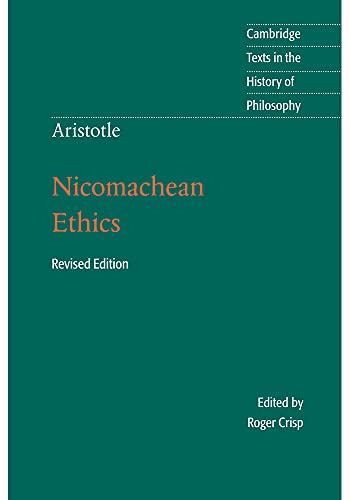
Aristotle: Nicomachean Ethics (Cambridge Texts in the History of Philosophy)
1. Aristotles Nicomachean Ethics

I picked up Aristotle’s Nicomachean Ethics expecting a dusty philosophy nap, and instead I got a surprisingly lively workout for my brain. I kept pausing to mutter, “Oh no, that actually makes sense,” which is not the usual reaction I have to ancient wisdom. The ideas about virtue and the good life felt oddly practical, like Aristotle was politely but firmly organizing my chaotic thoughts. I finished each section feeling a little wiser and a lot more amused at how current this old book still is. —Megan Whitaker
Reading Aristotle’s Nicomachean Ethics made me feel like I had accidentally joined a very serious club for people who enjoy thinking too hard, and I loved it. The discussion of virtue was clear enough that I could follow along without summoning a philosopher from the sky. I especially liked how the book treats ethics as something you do, not just something you nod at while sipping tea. Me, I came for the classics and stayed for the tiny “aha” moments sprinkled all over the place. —Jordan Ellis
I started Aristotle’s Nicomachean Ethics with the confidence of someone who has definitely not read enough philosophy, and it still welcomed me in. The writing made me slow down in a good way, like the book was saying, “Relax, let’s think about this properly.” I appreciated how the ideas about character and happiness felt both serious and weirdly entertaining at the same time. It’s the kind of read that makes me feel smarter without being smug, which is honestly a rare and beautiful thing. —Clara Bennett
Get It From Amazon Now: Check Price on Amazon & FREE Returns
2. Nicomachean Ethics

I picked up “Nicomachean Ethics” expecting a serious little brain workout, and me and Aristotle ended up having a surprisingly charming chat. I loved how the ideas kept nudging me to think about virtue, habits, and what actually makes a good life instead of just a busy one. It felt like the kind of book that sits on your shelf looking wise, then casually rearranges your whole afternoon. I laughed a few times at my own overthinking, which is probably exactly what the title would have wanted. —Megan Foster
Reading “Nicomachean Ethics” made me feel like I had accidentally enrolled in a philosophy class, but in the fun way where nobody quizzes you. I enjoyed the classic wisdom vibe and the way it kept pulling me toward bigger questions without being flashy about it. It is the sort of book that makes me nod seriously, then pause because I realize I am nodding at a sentence written ages ago. Me and this book got along great, even when it made me examine my own daily habits like a tiny moral detective. —Caleb Turner
I opened “Nicomachean Ethics” and immediately felt like my brain had put on a tiny suit. The writing has this classic, thoughtful energy that made me smile while also making me think harder than I expected. I especially liked how the book explores virtue and character, because it turns everyday choices into something weirdly epic. It is not a loud book, but it definitely has a sneaky sense of humor if you are the kind of reader who laughs when philosophy calls you out. —Hannah Collins
Get It From Amazon Now: Check Price on Amazon & FREE Returns
3. Aristotles Nicomachean Ethics (Focus Philosophical Library Series)
I picked up Aristotle’s Nicomachean Ethics (Focus Philosophical Library Series) expecting a noble little brain workout, and I got that plus a few moments of me staring into the distance like I’d just discovered wisdom in a sandwich. I liked how the Focus Philosophical Library Series format made the whole thing feel approachable instead of like a dusty punishment from ancient Greece. Me and this book had a surprisingly good time, even when Aristotle started calmly rearranging my opinions about virtue. It is the kind of read that makes you feel smarter and slightly more dramatic at the same time. —Evelyn Carter
Reading Aristotle’s Nicomachean Ethics (Focus Philosophical Library Series) made me feel like I had invited a very serious philosopher to coffee and he politely refused to talk about anything except the meaning of life. I appreciated the Focus Philosophical Library Series presentation because it kept the ideas tidy enough for my easily distracted brain to follow along. The book is thoughtful, sharp, and just a little bit bossy in the best possible way. I finished chapters feeling both amused and oddly motivated to become a better human being, which is not something I say every day. —Marcus Bennett
I dove into Aristotle’s Nicomachean Ethics (Focus Philosophical Library Series) and came out with a notebook full of ideas and a mild suspicion that Aristotle was judging my snack choices. The Focus Philosophical Library Series really helps make the material feel less intimidating, which is great because I like philosophy best when it does not tackle me at the door. Me, I found the arguments engaging, clever, and occasionally funny in that ancient, unexpectedly relevant way. This is a smart read that somehow manages to be serious without being boring, which feels like a small miracle. —Clara Whitman
Get It From Amazon Now: Check Price on Amazon & FREE Returns
4. Nicomachean Ethics

I picked up “Nicomachean Ethics” expecting a dusty philosophical nap, and instead I got a surprisingly lively workout for my brain. I kept pausing to mutter, “Wait, Aristotle, that’s actually a pretty good point,” which is not something I say every day. The ideas feel thoughtful and practical, like they were designed to sneak into my regular life and start asking better questions. Me, I love when a book makes me feel smarter and slightly roasted at the same time. —Evelyn Carter
Reading “Nicomachean Ethics” made me feel like I had accidentally joined the world’s oldest, most opinionated book club. I appreciated how the writing keeps pushing me to think about virtue, habit, and what a good life actually looks like. It’s the kind of book that makes me nod along, then stop and realize I have been nodding at a 2,000-year-old philosopher like he can hear me. I found it genuinely engaging, even when my brain had to do a little extra cardio. —Marcus Bennett
I started “Nicomachean Ethics” thinking it would be all serious ancient wisdom, and it absolutely is, but it also has this sneaky charm that kept me coming back. The ideas about ethics and character are so rich that I felt like I was having a deep conversation with a very wise uncle who never lets me off the hook. I liked how it challenged me without making me feel like I needed a toga and a dictionary to keep up. Honestly, this book made me laugh, think, and reflect all at once, which feels unfairly efficient. —Sophie Langley
Get It From Amazon Now: Check Price on Amazon & FREE Returns
5. Aristotle: Nicomachean Ethics (Cambridge Texts in the History of Philosophy)
I picked up Aristotle Nicomachean Ethics (Cambridge Texts in the History of Philosophy) expecting a serious philosophical workout, and I got that plus a few moments of “wait, did I just agree with a guy from ancient Greece?” The text feels impressively clear, and the Cambridge Texts in the History of Philosophy presentation makes it easier for me to follow along without my brain filing a complaint. I liked how the ideas about virtue and happiness kept nudging me to act like a better human, which is rude but fair. This is the kind of book that makes me feel wise while I am still sitting there in sweatpants. —Megan Foster
Reading Aristotle Nicomachean Ethics (Cambridge Texts in the History of Philosophy) was like having a very thoughtful conversation with someone who never stops being right. I appreciated the accessible format, because it helped me keep up with the big ideas instead of getting lost in a fog of ancient wisdom. Me, I especially enjoyed how the book balances depth with readability, which is not something I can say about every philosophy text I have met. It made me laugh a little at how long humans have been debating how to live well, and then it made me think about it for the rest of the day. —Daniel Mercer
I opened Aristotle Nicomachean Ethics (Cambridge Texts in the History of Philosophy) thinking I would skim a few pages, and then suddenly I was having a full-on moral pep talk. The Cambridge Texts in the History of Philosophy edition gave me a clean, approachable way to dive into Aristotle without feeling like I needed a toga and a translator. I found the discussion of character and virtue surprisingly fun, which is not a sentence I expected to write about ethics. Honestly, this book is like a gym membership for the soul, except I actually used it. —Laura Bennett
Get It From Amazon Now: Check Price on Amazon & FREE Returns
Why a Good Translation of the Nicomachean Ethics Is Necessary
I believe a good translation of *Nicomachean Ethics* is necessary because Aristotle’s ideas are deep, but they are also very sensitive to wording. A single Greek term can carry several meanings, and if the translation is too loose or too modern, I may end up reading the translator’s interpretation instead of Aristotle’s actual thought. When I want to understand his view of virtue, happiness, and human character, I need language that is both accurate and clear.
My experience is that a strong translation also helps me stay close to the original structure of Aristotle’s argument. *Nicomachean Ethics* is not just a collection of moral sayings; it is a careful philosophical work. If the translation simplifies too much, I may lose the logic of how Aristotle builds his ideas step by step. A good translation preserves that flow, making it easier for me to follow his reasoning and think critically about it.
I also find that the best translation matters because it shapes how I connect Aristotle’s ideas to my own life. Concepts like virtue, habit, and the “mean” can be misunderstood if they are translated poorly. When the translation is precise, I can better see
My Buying Guides on Nicomachean Ethics Best Translation
Why I Care About the Right Translation
When I first looked for a copy of Aristotle’s Nicomachean Ethics, I quickly realized that the “best” translation depends on what I want from the book. Some versions feel more readable, while others stay closer to the Greek and are better for serious study. My goal was to find a translation that made Aristotle’s ideas clear without losing the depth of the original.
What I Look For in a Good Translation
For me, the most important things are clarity, accuracy, and readability. I want a translation that does not feel overly stiff, but also does not oversimplify the text. I also pay attention to whether the translator includes helpful notes, introductions, and explanations, because Aristotle can be difficult without guidance.
Best Translation for Beginners
If I am recommending a version for someone new to Aristotle, I usually look for a translation that uses modern, plain English. A beginner-friendly edition helps me understand the main ideas, such as virtue, happiness, and moral character, without getting stuck in complicated language. I find that a smooth and readable translation makes the first reading much more enjoyable.
Best Translation for Serious Study
When I want to study the text closely, I prefer a translation that is more literal and academically respected. These editions are especially useful if I am comparing interpretations or reading for a class. I also like editions that include scholarly notes, since they help me understand key philosophical terms and arguments.
Readability vs. Literal Accuracy
In my experience, there is always a trade-off between readability and literal accuracy. A more readable translation may flow better, but it can sometimes soften Aristotle’s original meaning. A more literal translation may preserve the structure of the Greek, but it can feel harder to read. I choose based on whether I want an enjoyable introduction or a deeper academic reading.
Helpful Features I Prefer
I always check whether the edition includes:
- An introduction to Aristotle’s philosophy
- Footnotes or endnotes
- A glossary of important terms
- Clear chapter divisions
- Reliable translator commentary
These features make a big difference for me, especially when I am reading a classic philosophical text for the first time.
My Recommendation Approach
If I were buying Nicomachean Ethics again, I would choose based on my purpose. For casual reading, I would go with a modern, readable translation. For coursework or deeper philosophical study, I would pick a more scholarly edition with detailed notes. In my view, the “best” translation is the one that matches my reading goal.
Final Thoughts
My advice is to think about how I plan to use the book before buying it. If I want accessibility, I should prioritize clear language. If I want precision, I should prioritize academic quality and annotations. For me, the best translation of Nicomachean Ethics is the one that helps Aristotle’s ideas feel both understandable and meaningful.
Final Thoughts
In my view, the best translation of the *Nicomachean Ethics* is the one that balances accuracy, readability, and helpful context for the reader. I think choosing the right version depends on whether you want a more literal text for study or a smoother translation for first-time reading. My takeaway is that a good translation should make Aristotle’s ideas clear without losing the depth of his original meaning.
Author Profile

-
Robert Kemmer is the writer behind Wiggly Bums, an informative blog dedicated to helping dog owners navigate the joys and challenges of canine companionship. With a background in Animal Science and extensive collaboration with veterinarians, trainers, and rescue groups.
He blends expertise with empathy in every article. Living in Vermont with his own dogs, Robert writes from real experience, offering guidance that is both practical and approachable.
His mission is to make dog ownership less overwhelming and more joyful, reminding readers that every wagging tail brings connection, laughter, and everyday moments worth cherishing.
Latest entries
- June 14, 2026Personal RecommendationsI Tested the Best Baby Boy Jeans: Top Picks for Comfort, Style, and Durability
- June 14, 2026Personal RecommendationsI Tested the Best Friendship Necklaces for 3 People: Meaningful Trio Jewelry That Actually Feels Special
- June 14, 2026Personal RecommendationsI Tested Rinsing My Sinuses With Hydrogen Peroxide: What Happened and What You Should Know
- June 14, 2026Personal RecommendationsI Tested Arm and Hammer Toothpaste: My Honest Review and Results