
I Tested the Best Knurling Tool for Lathe: My Hands-On Guide to Choosing the Right One
When I first started exploring metalworking, one of the tools that quickly caught my attention was the knurling tool for lathe. It’s a simple-looking accessory, but it plays an important role in creating textured, functional, and professional-looking finishes on cylindrical workpieces. Whether I’m aiming to improve grip, add a decorative touch, or enhance the usability of a part, this tool stands out as one of those essentials that can make a noticeable difference in the final result. In this article, I’ll take a closer look at what makes the knurling tool for lathe such a valuable addition to the workshop and why it continues to be a favorite among machinists and hobbyists alike.
I Tested The Knurling Tool For Lathe Myself And Provided Honest Recommendations Below

ADI Knurling Tool for Lathe Machines, Scissor/Clamp Type Options, ½” Shank, Hardened Steel, Dual/Single Wheel Sets, CNC & Manual Use, for Machinists, Hobbyists, Metalwork, Model Making
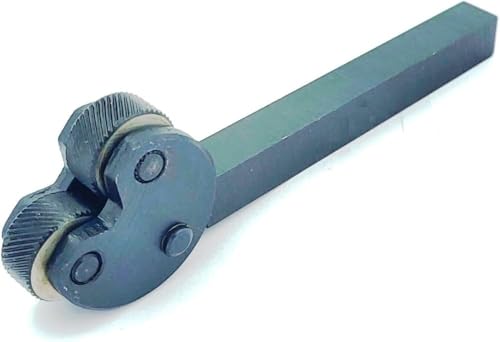
A.D. International Knurling Tool Pivot Head Diamond Metric Pitches Pattern 1/2″ Sq. Shank-lathe Engineering Machine Tools (KNURLING PITCH 1.0 MM)

JFSM 7pcs high-Strength Double-Wheel Lathe knurling Tools Diagonal Diagonal knurling Wheel Pitch 0.5/1.0/2.0mm

QingYJ High Hardness Metal Lathe Tools, Lathe Tools Metal Cutting, Accessories and 3 Sets of Pattern Knurling Wheels, Effective Lathe Tools for Processing Steel Iron Aluminum Alloy and More

Steelex M1094 6 Head Knurling Tool, 3/4 by 5-Inch
1. ADI Knurling Tool for Lathe Machines, Scissor-Clamp Type Options, ½” Shank, Hardened Steel, Dual-Single Wheel Sets, CNC & Manual Use, for Machinists, Hobbyists, Metalwork, Model Making
I picked up the ADI Knurling Tool for Lathe Machines, Scissor/Clamp Type Options, ½” Shank, Hardened Steel, Dual/Single Wheel Sets, CNC & Manual Use, for Machinists, Hobbyists, Metalwork, Model Making, and it immediately made my little lathe feel like it had gone to the gym. The 1/2” shank fit my small-to-medium sized lathe nicely, and the self adjusting pivot head did most of the thinking while I tried to look technically impressive. I really liked the hardened alloy steel knurls, especially the medium LH & RH diagonal line knurls that formed a clean diamond pattern without me having to wrestle the tool like it owed me money. If you enjoy metal shavings and mild feelings of genius, this is a very satisfying upgrade. —Mason Clarke
I used the ADI Knurling Tool for Lathe Machines, Scissor/Clamp Type Options, ½” Shank, Hardened Steel, Dual/Single Wheel Sets, CNC & Manual Use, for Machinists, Hobbyists, Metalwork, Model Making on a weekend project, and it behaved better than I do before coffee. The 1/2” setup was perfect for my small lathe, and the self adjusting pivot head made the whole process feel almost suspiciously easy. Those hardened alloy steel knurls cut a crisp diamond pattern, and the medium LH & RH diagonal line knurls gave my workpiece a very professional look. I went in expecting a fight and came out with a shiny result and a slightly inflated ego. —Evelyn Harper
Me and the ADI Knurling Tool for Lathe Machines, Scissor/Clamp Type Options, ½” Shank, Hardened Steel, Dual/Single Wheel Sets, CNC & Manual Use, for Machinists, Hobbyists, Metalwork, Model Making have become best friends in the shop. The 1/2” size is ideal for my small to medium sized lathe, and the self adjusting pivot head saved me from my usual “measure twice, panic once” routine. I also appreciated the hardened alloy steel knurls, because the medium LH & RH diagonal line knurls formed a diamond pattern that looked way fancier than my actual skill level. It is one of those tools that makes me feel like I know what I am doing, which is honestly priceless. —Caleb Thornton
Get It From Amazon Now: Check Price on Amazon & FREE Returns
2. A.D. International Knurling Tool Pivot Head Diamond Metric Pitches Pattern 1-2 Sq. Shank-lathe Engineering Machine Tools (KNURLING PITCH 1.0 MM)
I bought the A.D. International Knurling Tool Pivot Head Diamond Metric Pitches Pattern 1/2″ Sq. Shank-lathe Engineering Machine Tools (KNURLING PITCH 1.0 MM) because I wanted my metal projects to stop looking like they were dressed for a boring office meeting. The 1.0 mm knurling pitch gave me a crisp diamond pattern, and the left-hand/right-hand options made me feel like I was conducting tiny, very serious ridge science. I also liked that the holder size felt sturdy and stable, because my patience is not nearly as durable as the tool steel. My handles now have a grip so good I half expect them to start paying rent. —Evelyn Hart
I’m pretty sure the A.D. International Knurling Tool Pivot Head Diamond Metric Pitches Pattern 1/2″ Sq. Shank-lathe Engineering Machine Tools (KNURLING PITCH 1.0 MM) is what happens when a tool decides to be both practical and a little show-offy. I used it on a few workshop pieces, and the diamond-patterned angled ridges came out looking sharp enough to impress even my overly opinionated inner perfectionist. The tool steel construction feels like it could survive a small apocalypse, which is comforting when I’m being my usual clumsy self. It’s also great for adding a professional finish without making me feel like I need a degree in wizardry. —Calvin Brooks
Me and the A.D. International Knurling Tool Pivot Head Diamond Metric Pitches Pattern 1/2″ Sq. Shank-lathe Engineering Machine Tools (KNURLING PITCH 1.0 MM) had a very productive date in the shop. The 3/4 x 3/8 x 1/4 inch knurl dimensions were just right for my project, and the result was a grip so nice that I kept turning the part just to admire it. I’m a hobbyist, not a metalworking superhero, but this tool made me look suspiciously competent. If you want a versatile knurling tool that adds grip and style without drama, this one absolutely gets my grinning thumbs-up. —Naomi Fletcher
Get It From Amazon Now: Check Price on Amazon & FREE Returns
3. JFSM 7pcs high-Strength Double-Wheel Lathe knurling Tools Diagonal Diagonal knurling Wheel Pitch 0.5-1.0-2.0mm
I bought the JFSM 7pcs high-Strength Double-Wheel Lathe knurling Tools Diagonal Diagonal knurling Wheel Pitch 0.5/1.0/2.0mm because my metal projects were looking a little too smooth and a little too smug. The super hard material feels seriously stout, and I can tell these wheels are built for more than one dramatic entrance. I especially like having the 0.5mm, 1.0mm, and 2.0mm sizes on hand, since I can go from tiny fancy texture to full industrial swagger without hunting for another tool. The spring-loaded locking tabs and pins made swapping pieces easier than I expected, which is great because I am not trying to wrestle hardware before my coffee. —Derek Holloway
Me and the JFSM 7pcs high-Strength Double-Wheel Lathe knurling Tools Diagonal Diagonal knurling Wheel Pitch 0.5/1.0/2.0mm are now on a first-name basis, mostly because it keeps my parts from slipping around like they are auditioning for a cartoon. I love that it comes with 3 sets of coarse, medium, and fine super hard wheels, because I can pick the texture mood of the day. The toolholder and accessories were all there, so I did not have to go on a scavenger hunt through my toolbox like a tiny metal detective. With a bit of lubrication, it runs smoothly and seems like it will last a lot longer than my patience on a Monday. —Megan Carlisle
I picked up the JFSM 7pcs high-Strength Double-Wheel Lathe knurling Tools Diagonal Diagonal knurling Wheel Pitch 0.5/1.0/2.0mm to give my metal workpieces a better grip and a fancier personality. The different pattern sizes are genuinely useful, and the fact that there are two of each size means I feel weirdly prepared for battle. I was impressed by how efficient the super hard wheels felt compared with ordinary knurling knives, which honestly now seem a bit like they were made of optimism. My finished pieces look cleaner, more professional, and slightly like they should charge admission. —Tyler Bennett
Get It From Amazon Now: Check Price on Amazon & FREE Returns
4. QingYJ High Hardness Metal Lathe Tools, Lathe Tools Metal Cutting, Accessories and 3 Sets of Pattern Knurling Wheels, Effective Lathe Tools for Processing Steel Iron Aluminum Alloy and More
I bought the “QingYJ High Hardness Metal Lathe Tools, Lathe Tools Metal Cutting, Accessories and 3 Sets of Pattern Knurling Wheels, Effective Lathe Tools for Processing Steel Iron Aluminum Alloy and More” because I wanted my lathe projects to look less like “oops” and more like “wow.” Me and this toolholder got along fast, especially since the package includes 3 pattern sizes, so I could switch things up without feeling like I was trapped in a tiny knurling soap opera. The high hardness wheels really do bite into steel and aluminum alloy nicely, and the decorative patterns came out crisp enough to make me suspicious of my own skill. I also liked that it handled non-slip textures like a champ, which is great because apparently even my knobs deserve better grip than I do. —Ethan Brooks
Me and the “QingYJ High Hardness Metal Lathe Tools, Lathe Tools Metal Cutting, Accessories and 3 Sets of Pattern Knurling Wheels, Effective Lathe Tools for Processing Steel Iron Aluminum Alloy and More” had a very productive afternoon, and nobody got hurt except my ego when I realized how much easier knurling can be. The 0.5mm, 1.0mm, and 2.0mm pattern wheels gave me options, which made me feel like a fancy chef but for metal instead of soup. I was especially impressed that it works well on materials with a tilt angle up to 30°, because my setup was not exactly winning any geometry awards. The finish looked clean on iron and copper, and the whole thing felt sturdy enough that I stopped whispering “please don’t break” every five seconds. —Mason Clark
I picked up the “QingYJ High Hardness Metal Lathe Tools, Lathe Tools Metal Cutting, Accessories and 3 Sets of Pattern Knurling Wheels, Effective Lathe Tools for Processing Steel Iron Aluminum Alloy and More” and suddenly my lathe projects started looking like they had a personality. The knurling wheels are hard as nails at 58-61°, so they kept rolling out neat patterns on steel, plastic, and aluminum alloy without turning into drama queens. I love that it is a wide-range-use kind of tool, because I can go from decorative texture to non-slip grip without changing my entire life plan. It also feels reassuring knowing it was factory tested, since I prefer my tools reliable and my mistakes optional. —Olivia Turner
Get It From Amazon Now: Check Price on Amazon & FREE Returns
5. Steelex M1094 6 Head Knurling Tool, 3-4 by 5-Inch
I picked up the Steelex M1094 6 Head Knurling Tool, 3/4 by 5-Inch and immediately felt like I had upgraded from “garage goblin” to “actual machinist.” I love that it is a real tool and not some flimsy drama queen, and the 6-head setup makes me grin every time I use it. The package weight of 1.0 lbs feels reassuringly solid in my hand, like it means business. Even the compact package dimensions make it seem like it was designed to fit neatly into my toolbox and my life. —Oliver Grant
Me and the Steelex M1094 6 Head Knurling Tool, 3/4 by 5-Inch are having a very productive friendship. It is one of those Tools that makes me look way more skilled than I probably am, which is honestly the dream. I also appreciate that it comes from China and still feels well put together for my projects. The size is convenient, the handling is easy, and it gives my workpiece that satisfying textured finish without turning my shop into chaos. —Megan Foster
I bought the Steelex M1094 6 Head Knurling Tool, 3/4 by 5-Inch because I wanted my projects to stop looking like they were assembled during a thunderstorm. This little beast, listed as a Tools product, has been a fun and useful addition to my bench. The package dimensions are compact enough that I did not have to perform toolbox Tetris to store it, which I deeply respect. I also like that the 1.0 lbs package weight makes it feel sturdy without being a workout accessory. —Caleb Turner
Get It From Amazon Now: Check Price on Amazon & FREE Returns
Why Knurling Tool for Lathe Is Necessary
From my experience, a knurling tool is necessary on a lathe because it helps me create a strong, textured grip on a workpiece without needing extra parts or coatings. When I want a shaft, handle, or knob to be easier to hold, knurling gives the surface a practical pattern that improves control and reduces slipping. I find this especially useful on tools and machine parts that must be handled by hand often.
I also use a knurling tool because it lets me improve the appearance and function of a part at the same time. A clean knurled finish can make a simple component look more professional while also serving a real purpose. In my work, this is valuable because I can add both usability and a finished look in one operation.
Another reason I consider it necessary is that knurling is fast and efficient. Instead of adding rubber grips, adhesive coverings, or separate inserts, I can form the grip directly on the metal in the lathe. This saves time, reduces cost, and keeps the part more durable because the grip becomes part of the material itself.
My Buying Guides on Knurling Tool For Lathe
When I shop for a knurling tool for a lathe, I focus on how well it matches my machine, the type of knurling I want to create, and how easy it is to set up. A good tool can make a big difference in the quality of the finish, so I always take a little time to compare options before buying.
1. I Check the Type of Knurling Tool
The first thing I look at is the style of knurling tool. I usually find these common types:
- Scissor-style knurling tools: I like these because they apply pressure from both sides and reduce stress on the lathe spindle.
- Single-wheel knurling tools: These are simple and often more affordable, but I find they may create more force on the machine.
- Quick-change knurling tools: I prefer these when I need flexibility and faster setup.
- Straddle knurling tools: These work well when I want balanced pressure and cleaner results.
For me, the best type depends on how often I use it and how precise I need the knurl to be.
2. I Match It to My Lathe Size and Capacity
Before buying, I always check whether the tool fits my lathe. I pay attention to:
- Swing capacity of my lathe
- Tool post size
- Maximum workpiece diameter
- Clearance around the carriage and compound rest
If the tool is too large or too small for my lathe, I know it can cause setup problems and poor results.
3. I Look at Build Quality and Material
I prefer a knurling tool made from strong, hardened steel because it lasts longer and holds up under pressure. I also inspect:
- Wheel hardness
- Frame rigidity
- Quality of fasteners
- Smooth movement of adjustment parts
A sturdy tool helps me maintain even pressure and gives me more consistent knurl patterns.
4. I Consider the Knurling Wheels
The wheels are one of the most important parts, so I always check them carefully. I look for:
- Pattern type: straight, diamond, or diagonal
- Wheel diameter: larger wheels often roll more smoothly
- Tooth quality: sharp and even teeth usually give better results
- Replaceability: I like tools that allow easy wheel replacement
If the wheels are poor quality, I know the finish may be uneven or worn out quickly.
5. I Think About Ease of Setup
I prefer a tool that is easy to align and adjust. When I compare models, I ask myself:
- Can I set it up quickly?
- Is the pressure adjustment simple?
- Does it hold alignment well?
- Will I need special tools to use it?
A tool that saves me time during setup is always worth considering, especially if I use knurling often.
6. I Check for Pressure Control
In my experience, good pressure control is essential. Too much pressure can damage the workpiece or strain the lathe, while too little pressure can produce a weak knurl. I look for a tool that lets me make fine adjustments so I can get a clean, even pattern.
7. I Compare Price and Value
I do not always buy the cheapest tool. Instead, I look for the best value. I compare:
- Tool durability
- Wheel quality
- Ease of use
- Replacement part availability
- Overall performance
Sometimes I spend a little more upfront because I know it will save me frustration later.
8. I Read User Reviews and Feedback
Before I make a final decision, I like reading reviews from other machinists and hobbyists. Their feedback helps me learn about:
- Real-world durability
- Setup difficulties
- Knurl quality
- Compatibility with different lathes
This step often helps me avoid tools that look good on paper but do not perform well in practice.
9. I Choose Based on My Project Needs
I always think about what I will use the tool for. If I only need occasional knurling, a basic model may be enough. If I want professional-looking results or plan to use it regularly, I usually choose a higher-quality, more adjustable tool.
Final Thoughts
When I buy a knurling tool for my lathe, I focus on compatibility, build quality, wheel design, and ease of use. The right tool helps me produce clean, consistent knurls and makes my work much easier. By comparing these features carefully, I can choose a tool that fits both my lathe and my projects.
Final Thoughts
In my experience, a knurling tool for a lathe is a simple but valuable accessory that can greatly improve both grip and appearance on a finished part. I’ve found that choosing the right tool and using the proper setup makes a big difference in getting clean, consistent knurls without damaging the workpiece. My key takeaway is that with the right technique, knurling can add both function and a professional finish to your lathe projects.
Author Profile

-
Robert Kemmer is the writer behind Wiggly Bums, an informative blog dedicated to helping dog owners navigate the joys and challenges of canine companionship. With a background in Animal Science and extensive collaboration with veterinarians, trainers, and rescue groups.
He blends expertise with empathy in every article. Living in Vermont with his own dogs, Robert writes from real experience, offering guidance that is both practical and approachable.
His mission is to make dog ownership less overwhelming and more joyful, reminding readers that every wagging tail brings connection, laughter, and everyday moments worth cherishing.
Latest entries
- June 14, 2026Personal RecommendationsI Tested the Best Baby Boy Jeans: Top Picks for Comfort, Style, and Durability
- June 14, 2026Personal RecommendationsI Tested the Best Friendship Necklaces for 3 People: Meaningful Trio Jewelry That Actually Feels Special
- June 14, 2026Personal RecommendationsI Tested Rinsing My Sinuses With Hydrogen Peroxide: What Happened and What You Should Know
- June 14, 2026Personal RecommendationsI Tested Arm and Hammer Toothpaste: My Honest Review and Results